12 min read
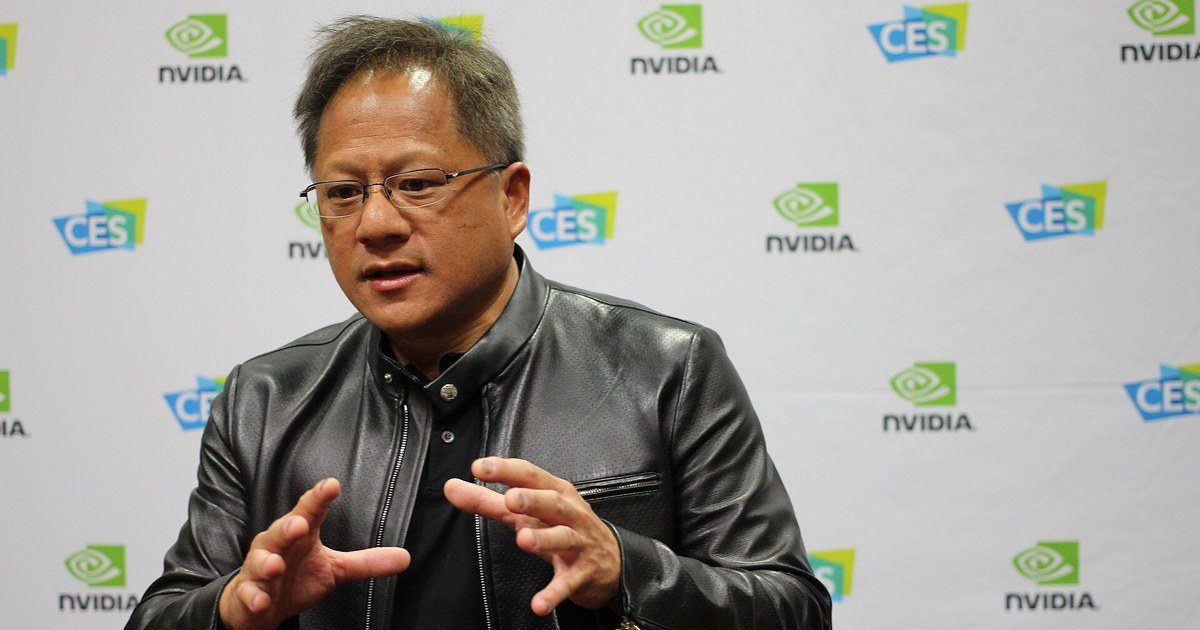
The Nvidia Jensen Huang investigation started on November 8, 2026, nine days before Q3 earnings. Nvidia’s board said a committee of independent directors, working with outside counsel, will look into recent reporting that Huang was the target of a foreign intelligence effort. The board also said it has “no reason to believe” that national security or company secrets were compromised.
The confirmed facts come from Nvidia itself. The more serious claims come from The New York Times and have not been tested. Below I keep the two apart, then cover what the investigation could mean for your portfolio.
Key takeaways
- On November 8, 2026, Nvidia’s board said independent directors assisted by outside counsel will oversee an investigation, and named no individual directors (Nvidia board statement).
- The New York Times reported that Singapore-based Megaspeed had become one of Nvidia’s largest buyers, purchasing about $4.8 billion of equipment (as cited by Al Jazeera). Nvidia has not confirmed this figure.
- Nvidia reports third-quarter fiscal 2027 results on November 17, 2026, with a call at 5 p.m. ET (Nvidia release, October 28, 2026).
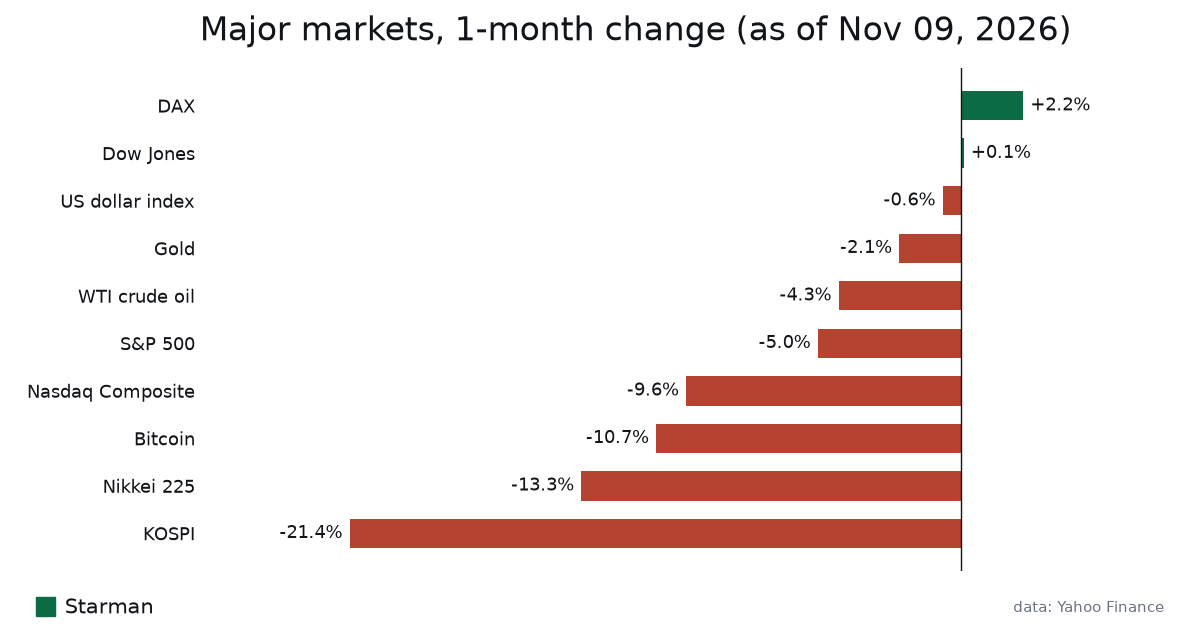
- The Nasdaq Composite fell 9.61% in the month to November 6, before the board’s announcement (Yahoo Finance).
What did Nvidia’s board announce on November 8?
The board statement on Nvidia’s newsroom says it is opening an independent investigation “in light of recent reporting that founder and CEO Jensen Huang has been the target of a foreign intelligence effort.” A committee of independent directors will oversee the work, assisted by outside independent counsel. The statement doesn’t say which directors sit on that committee or which law firm is involved.
The line most people will quote is that the board “has no reason to believe that either national security or NVIDIA secrets were compromised.” Read that as the board’s starting position. It is not a finding, because the same statement says the inquiry “will examine all available information,” and that work has only just begun.
The board also said Huang fully supports the review and has committed to cooperating. It said it “has confidence in Jensen and his leadership team” and will give further updates “as appropriate.” Separately, Nvidia told CNBC: “Today’s news will not slow NVIDIA. Jensen is committed to continuing to lead NVIDIA as CEO without interruption.”
For a shareholder, that second quote matters most. The company is telling you there is no change in leadership while the review runs.
What did Jensen Huang say in his email to employees?
On the same day, Huang sent an email to staff that Nvidia published as “A Message to Our Company”. In it he apologized to his family and colleagues, said he was unfaithful to his wife and took full responsibility. He wrote that he supports the investigation, will cooperate fully, and is committed to protecting Nvidia and supporting America’s national security.
The email does not name anyone else. I’m not going to guess at the parts of a personal message that he chose not to spell out. That isn’t my business, and it doesn’t help you make a money decision.
The part investors should notice is how quickly the company’s tone changed. Before the board announcement, Nvidia had described the interactions as not unusual, calling them ordinary customer contacts. It also said it does not share classified information with customers, according to TechCrunch and CNBC.
Within days, the board had moved to a formal review run by outside lawyers. That doesn’t prove anything went wrong. It does tell you the board decided the questions needed someone independent to answer them.

What has only been reported, and by whom?
Everything in this section comes from press reports. Nvidia’s statements refer only to “recent reporting” and do not confirm any of the details below.
The New York Times first reported on Friday, November 6, 2026, and again on November 8, citing people briefed on the matter, that a memo shared with Trump administration policymakers last spring identified Alice Huang as having been recruited by China’s Ministry of State Security to gather information on Jensen Huang. CNBC and TechCrunch both described that reporting.
CNBC describes Alice Huang as an executive at Singapore-based Megaspeed, while TechCrunch calls her a former executive; she is not related to Jensen Huang. The outlets don’t agree on her role: CNBC calls her an executive, while TechCrunch says she is a former executive.
CNBC describes Megaspeed as a company the U.S. has suspected of helping China get around restrictions on AI chip sales. That’s a suspicion CNBC attributes to the U.S. government, not a proven fact. The Times also reported that Megaspeed had become one of Nvidia’s largest buyers, purchasing about $4.8 billion of equipment, as cited by Al Jazeera.
A separate New York Times report on November 7 said the Trump administration approved a Chinese firm, New Matrix, to assemble Nvidia chips in Beijing, as CNBC described it. That is a different story from the investigation, but it lands on the same question lawmakers keep asking: how much access China has to advanced U.S. chips.
| Claim | Status | Where it comes from |
|---|---|---|
| Board opened an independent investigation, overseen by independent directors with outside counsel | Confirmed | Nvidia board statement, Nov 8, 2026 |
| Board has “no reason to believe” secrets were compromised | Confirmed as the board’s view, not a finding | Nvidia board statement |
| Huang will stay CEO “without interruption” | Confirmed | Nvidia statement to CNBC |
| A memo named Alice Huang as recruited by China’s Ministry of State Security | Reported | The New York Times, via CNBC and TechCrunch |
| Megaspeed bought about $4.8 billion of Nvidia equipment | Reported | The New York Times, via Al Jazeera |
| New Matrix approved to assemble Nvidia chips in Beijing | Reported | The New York Times, via CNBC |
Nvidia Jensen Huang investigation timeline: the dates that matter
The timing is awkward for Nvidia. The board’s announcement, the earnings release and a requested congressional briefing all fall within ten days of each other. Here’s the sequence, built only from the company’s releases and the outlets cited above.
| Date | Event | Source |
|---|---|---|
| Spring 2026 | Memo shared with Trump administration policymakers (reported) | The New York Times, via CNBC |
| October 25, 2026 | Nvidia’s third quarter of fiscal 2027 ends | Nvidia release |
| October 28, 2026 | Nvidia announces its earnings call date | Nvidia release |
| November 5, 2026 | Three House Republican committee chairs write to Huang requesting a briefing | CNBC |
| November 6, 2026 | First New York Times report | CNBC, TechCrunch |
| November 7, 2026 | Separate Times report on New Matrix chip assembly in Beijing | CNBC |
| November 8, 2026 | Board statement and Huang’s email to employees | Nvidia newsroom |
| November 17, 2026 | Q3 fiscal 2027 results, call at 5 p.m. ET | Nvidia release |
| November 18, 2026 | Requested closed-door briefing with House lawmakers | CNBC |
| January 2027 | Sen. Chris Coons set to chair the Senate Foreign Relations Committee | CNBC |
One detail I’d keep in mind: the quarter Nvidia reports on November 17 ended on October 25. That’s before any of these reports came out, so the sales figures for that quarter were already locked in. What can still change is what management says about the future, and whether analysts on the call ask about the investigation.
How does a board’s independent investigation work?
Nvidia hasn’t described its process beyond the November 8 statement, so the steps below describe how these reviews generally run. They are not a description of what Nvidia’s committee is doing.
- The board forms a committee of directors who are not part of management. Nvidia says that’s what it has done, without naming them.
- The committee hires outside lawyers who answer to the committee, not to the CEO. Nvidia confirmed it is using outside independent counsel.
- Counsel gathers documents and communications and interviews the people involved. The board says the inquiry “will examine all available information.”
- The lawyers report to the committee. The full board then decides what action to take and how much to make public.
The last step is where shareholders have the least visibility. The board has not said how long the investigation will take or whether it will publish the findings. It promised updates “as appropriate,” which leaves the board to decide what counts as appropriate.
Nobody knows yet whether this will take weeks or months. I’d be wary of anyone who claims to know, because the company hasn’t said.
Where were stock markets before the news broke?
Tech stocks were already under pressure. According to Yahoo Finance, the Nasdaq Composite closed at 24,579.43 on Friday, November 6, down 9.61% over the past month. The S&P 500 was down 5.0% over the same stretch. Those closes came before the board’s Sunday announcement.
| Market | Last | 1-day | 1-month | 3-month | As of |
|---|---|---|---|---|---|
| S&P 500 | 7,376.86 | +0.31% | -5.00% | -4.91% | Nov 6 |
| Nasdaq Composite | 24,579.43 | +1.09% | -9.61% | -7.91% | Nov 6 |
| Dow Jones | 51,285.73 | -0.46% | +0.11% | -5.09% | Nov 6 |
| Nikkei 225 | 58,775.50 | +2.33% | -13.28% | -12.24% | Nov 9 |
| KOSPI | 5,018.85 | -0.81% | -21.39% | -20.33% | Nov 9 |
| US 10-year yield | 4.86% | +0.45% | -7.11% | +4.05% | Nov 6 |
Here’s what those moves mean in dollars. If you had $10,000 in a fund tracking the Nasdaq Composite a month ago, the 9.61% drop would have taken about $961 off it. The same $10,000 in an S&P 500 tracker would have lost about $500. The Dow was roughly flat over the month, at +0.11%.
If you want that math applied to retirement accounts, I walked through it in what a 5% stock market drop costs a 401(k).
Asian markets traded on Monday, November 9, after the announcement. The Nikkei 225 rose 2.33% and the KOSPI fell 0.81%. I wouldn’t read either move as a verdict on Nvidia, because nothing in the data links them to this story. No Nvidia share price reaction had been reported at the time of writing, and U.S. markets hadn’t opened yet.
The macro backdrop isn’t easy for expensive growth stocks either. U.S. CPI inflation was 3.74% year over year in September (Bureau of Labor Statistics), the effective fed funds rate was 3.88% on November 5 (New York Fed), and the 10-year Treasury yield stood at 4.86%.
What does the investigation mean for Nvidia shareholders before November 17?
In the short term, the company’s message is continuity. Nvidia says Huang will lead “without interruption,” and the board says it has confidence in him and his team. Those are the official facts you have, and the investigation hasn’t produced anything that contradicts them.
The open questions are the ones that could move a valuation. The first is whether the review turns up anything the board’s initial view didn’t expect. The second is whether this episode feeds into U.S. export-control policy or Nvidia’s China-related sales.
The Megaspeed number shows why people are asking. If the Times is right that one buyer took about $4.8 billion of equipment, it’s fair to ask how much business comes through similar channels. Nvidia hasn’t answered that publicly, and I don’t have a figure to compare it against.
The November 17 call is the first scheduled chance for analysts to ask management directly. Whether executives will say anything beyond the board statement is unknown.
Why is Congress involved, and what happens on November 18?
The political pressure started before the board acted. On November 5, three House Republican committee chairs sent Huang a letter asking him to attend a closed-door briefing with lawmakers on November 18, the day after earnings. CNBC reported that the letter cited “significant national security concerns” about China’s access to sensitive U.S. technology.
Whether Huang will attend isn’t known. Nvidia declined to comment on that, according to the Times as cited by CNBC.
The criticism has come from both parties. Sen. Chris Coons (D-Del.) posted on X that “Congress will investigate and get answers.” According to CNBC, Coons is set to chair the Senate Foreign Relations Committee in January 2027, when Democrats take control.
Rep. Seth Magaziner (D-R.I.) called for Commerce Secretary Howard Lutnick to testify alongside Huang. Sen. John Cornyn (R-Texas) called the separate Times report about Nvidia chip assembly in Beijing “outrageous.”
Because both parties are involved, I’d expect this to stay on Washington’s agenda after the board’s review ends. Congressional inquiries move on their own schedule, and the change of committee chairs in January gives this one a longer timeline. Whether any of it changes export rules is the part nobody can answer today.
What are the main risks and common mistakes?
The biggest risk is not knowing what the investigation will find. A board that says it has “no reason to believe” secrets were compromised can still find something in documents it hasn’t read yet, or it can confirm that view. Until counsel reports, both are possible.
Policy risk comes next. Lawmakers on both sides are framing this as a question about China’s access to U.S. chips. If that pressure turns into new rules, the hit would come through sales, and that matters more to the stock than anything about one person.
Then there’s how the dates line up. Earnings on November 17 and the requested briefing on November 18 fall on back-to-back days. That’s two chances for news in 24 hours, and volatility around those days wouldn’t surprise me.
These are the mistakes I’d try hardest to avoid:
- Treating the Times’ reporting as if Nvidia had confirmed it. So far the company has confirmed the investigation and its own statements, not the memo or the $4.8 billion figure.
- Reading the board’s “no reason to believe” line as a clean bill of health. The board itself says the inquiry still has to examine all available information.
- Forgetting that a broad fund counts as exposure. A 9.61% monthly drop in the Nasdaq already shows how concentrated tech moves can hit “diversified” money.
- Trading on a weekend headline. I’ve done it before, and the Monday open was rarely the price I had in mind.
FAQ
Is Jensen Huang still Nvidia’s CEO?
Yes. Nvidia told CNBC that Huang “is committed to continuing to lead NVIDIA as CEO without interruption.” The board said it has confidence in him and his leadership team while the investigation runs.
Why is Nvidia investigating Jensen Huang?
The board said it acted “in light of recent reporting” that Huang had been the target of a foreign intelligence effort. That reporting came from The New York Times beginning November 6, 2026. The board did not repeat or confirm the specific claims in those reports.
Has anyone found that Nvidia secrets were leaked?
No finding has been published. The board said it “has no reason to believe that either national security or NVIDIA secrets were compromised,” but that is its stated view at the start of an inquiry, not a conclusion. Nvidia has previously said it does not share classified information with customers, according to TechCrunch and CNBC.
When does Nvidia report earnings?
Nvidia reports results for the third quarter of fiscal 2027 on Tuesday, November 17, 2026, with a conference call at 5 p.m. ET. The quarter ended October 25, 2026, according to Nvidia’s October 28 release.
What is Megaspeed?
Megaspeed is a Singapore-based company that CNBC describes as one the U.S. has suspected of helping China get around restrictions on AI chip sales. That suspicion has not been proven. The New York Times reported it had become one of Nvidia’s largest buyers, purchasing about $4.8 billion of equipment, as cited by Al Jazeera.
Will Jensen Huang testify to Congress?
Three House Republican committee chairs have asked him to attend a closed-door briefing on November 18, 2026. Whether he will go isn’t known. Nvidia declined to comment, according to the Times as cited by CNBC.
What I’m watching next
November 17 is the first date on my list. I’ll be listening for whether management takes questions on the investigation or on China-related sales, and whether the answers go beyond the board statement. On November 18 the question is simpler: does Huang attend the briefing, and do any of the lawmakers describe it afterward.
After that, I’m waiting on the board’s next update, since it has promised one “as appropriate” without giving a date. January 2027 is the longer-range marker, when Coons is set to take over the Senate Foreign Relations Committee. Until the investigation reports, I’m treating the confirmed statements and the reported claims as two separate piles, and I’d suggest you do the same.
This is not financial advice. Do your own research before you make any decision about your money.
Related reading
This article is for information only and is not financial advice. Crypto assets are volatile; you can lose all of your money.