12 min read
How to buy Anthropic stock comes down to two routes: ask a US broker for IPO shares at $70 to $78, or buy ANT once it starts trading on Nasdaq, expected Thursday, November 19, 2026. The price is set the night before, on Wednesday, November 18, and until then nothing is final. No source reports a retail IPO allocation for Korean or other non-US investors, so if you live outside the US, plan on the second route.
Key takeaways
- Anthropic plans to sell 825 million shares at $70 to $78, which would raise up to $64.35 billion at the top of the range (updated S-1, November 10, via ABC News and Yahoo Finance).
- Up to 20% of the deal is expected to go to retail investors through Schwab, Fidelity, E-Trade, Robinhood and SoFi (Yahoo Finance). That works out to about 165 million shares shared across every applicant.
- SpaceX closed its first day about 20% above its $150 IPO price (Yahoo Finance). After a jump that size, 10 ANT shares priced at $78 would cost $936 instead of $780.
- About 60% of more than 9,000 US IPOs from 1975 to 2021 traded flat or lower three years after their first-day close (Jay Ritter data, via Yahoo Finance).
How to buy Anthropic stock: the dates and numbers that decide it
The updated filing disclosed on Tuesday, November 10, sets the terms: 825 million Class A shares at $70 to $78 each, listed on the Nasdaq Global Select Market under the ticker ANT, according to ABC News and Yahoo Finance. At $78 that raises about $64.35 billion. At $70, about $57.75 billion.
The company’s timetable, as cited by Yahoo Finance: the roadshow (the weeks of pitch meetings with big fund managers) started November 10, pricing is expected November 18 and trading is expected to start November 19, subject to regulatory clearance. That last phrase matters. These dates are expected, not locked.
Anthropic IPO vs SpaceX IPO at a glance
| Item | Anthropic (ANT) | SpaceX |
|---|---|---|
| First trading day | November 19, 2026 (expected) | June 12, 2026 |
| Offer price | $70 to $78 range (final price not set) | $150 |
| Money raised | $57.75 billion to $64.35 billion | $85.7 billion |
| First-day result | Not traded yet | Closed about 20% above IPO price |
| Day-one net retail buying (Vanda Research estimate) | $250 million forecast, a record | $118 million |
The Vanda Research figure is an estimate built from futures markets, reported by Yahoo Finance, and past IPO patterns don’t have to repeat. Treat it as a measure of expected crowding, not a forecast of price.
Why the valuation headlines don’t match
You’ll see $1 trillion, $1.3 trillion and $1.4 trillion quoted for the same deal. The gap comes from share counts. “Fully diluted” means counting employee stock options and other securities that can turn into shares, and on that basis Yahoo Finance puts the range at roughly $1.3 trillion to $1.45 trillion. ABC News says up to $1.4 trillion, lower than some earlier estimates of $2 trillion.
The last private round, in May 2026, valued Anthropic at $965 billion (Yahoo Finance). The full backstory is in our Anthropic IPO price and date explainer; this guide sticks to the mechanics of getting shares.
How to get Anthropic IPO shares through a US broker
Yahoo Finance reported on November 12 that up to 20% of the shares are expected to go to retail investors through online brokers including Charles Schwab, Fidelity, E-Trade, Robinhood and SoFi. Everything else goes to the institutional order book run by the underwriters. EvercoreISI analysts estimate Goldman Sachs and Morgan Stanley will be co-lead underwriters with 22 banks on the deal, though that’s an estimate, not something stated in a filing.
Here’s the usual sequence at a US broker that offers IPO access:
- Open and fund the account now. IPO requests generally need settled cash sitting in the account. Money that’s still in transit on November 18 doesn’t help you.
- Find the offering in the broker’s IPO section and read the preliminary prospectus. The amended S-1 is on the SEC’s site.
- Submit your request (brokers call it an indication of interest or conditional offer): a share count or dollar amount. Size it at the $78 top of the range, and remember the final price could land outside the range.
- Reconfirm after pricing if your broker asks. Pricing is expected November 18, and many brokers want a second click once the number is known.
- Check what you got before trading opens on November 19. It may be fewer shares than you asked for, or none.
Why your Anthropic IPO allocation isn’t guaranteed
Do the division. Up to 20% of 825 million is about 165 million shares, split across every account at every participating broker. If Vanda’s estimate of record retail demand is close, requests could swamp that pool, and brokers ration with their own rules. Each broker sets its own eligibility and allocation policy, and some limit your future IPO access if you sell soon after the debut (“flipping”). Read those terms before you click, not after.
How to buy ANT stock on its first trading day
Once ANT trades, any broker that offers US-listed stocks can usually fill an order. No allocation, no lottery. The catch is the price: you pay whatever the market says that day, which can be very different from the IPO price.
What time does Anthropic stock start trading?
Nasdaq opens at 9:30 a.m. Eastern, but a new listing usually doesn’t trade at the bell. The exchange runs a separate opening auction for the IPO, matching buy and sell orders until it finds a price, and that first trade often comes later in the session. Your order may sit as “pending” for hours.
For readers in Korea, 9:30 a.m. Eastern is 11:30 p.m. in Seoul in November, so the first ANT print could easily land after midnight on November 20 local time.
Limit order vs market order on IPO day
A market order says “fill me at any price.” A limit order says “fill me only at this price or better.” On an IPO day, I’d only use the second one, because the opening auction price is set by a flood of buyers who all hit the button at once, and nobody knows yet where that lands relative to $70 to $78.
SpaceX is the recent precedent. It listed June 12, 2026 at $150 and closed its first day about 20% higher (Yahoo Finance). Anyone who sent a market order into that kind of demand paid up for the privilege. A limit order caps your cost. The trade-off is that if the stock blows past your limit, you simply don’t get filled, and that’s fine.
Can Korean and other non-US investors buy Anthropic stock?
Short version: usually yes after it lists, almost certainly not before. No source reports a retail IPO allocation for Korean or other non-US investors, and no source says any specific Korean or other non-US broker will offer ANT allocations or list ANT on day one. What you can usually do is buy once it trades, through a broker that offers US stocks. Ask your broker directly whether ANT will be available on November 19.
What to have ready before November 19
- An account with overseas (US) stock trading switched on, which some brokers require as a separate step.
- Dollars in the account, or an auto-exchange setting you understand, including its spread.
- The ticker (ANT) and exchange (Nasdaq) written down, so you don’t buy a look-alike symbol in a rush.
- Your limit price and share count decided in advance, not at 1 a.m. while the auction is running.
How the won-dollar rate changes your cost
The dollar bought 1,334.92 won on November 12, down 5.47% over three months (Yahoo Finance). That means the won has strengthened, so a dollar of ANT costs fewer won than it did in August. It cuts both ways after you buy: if the won keeps strengthening, your holding is worth fewer won even if the share price doesn’t move. Korea also taxes overseas stock gains under its own rules, so check the current treatment with your broker or an accountant before you sell.
By the numbers
- Up to 20% of the 825 million shares in the November 10 filing (Yahoo Finance) is 165,000,000 shares for retail, split across all brokers.
- Ten shares at the $78 top of the range cost $780 at the IPO price.
- Buy those same 10 shares after a 20% jump, the size of SpaceX’s June 12, 2026 first-day gain, and they cost $936.
- At 1,334.92 won per dollar (Yahoo Finance, November 12), $936 is about 1,249,485 won before fees.
How we calculated: 825 million shares and the $70 to $78 range from the November 10 updated S-1 (ABC News, Yahoo Finance), the 20% retail share from Yahoo Finance on November 12, SpaceX’s roughly 20% first-day gain from Yahoo Finance, and USD/KRW of 1,334.92 from Yahoo Finance on November 12; the 20% jump is a scenario, not a forecast.
How 5.1% Treasury yields and the Nvidia shock feed into ANT’s debut
This IPO isn’t pricing in a calm market. The 10-year Treasury yield was 5.1% on November 12, up 8.99% over three months (Yahoo Finance), and MarketWatch reported that bond yields just saw their biggest surge since 2022 as expectations grow for more Fed rate hikes. The effective fed funds rate stood at 3.88% on November 10 (New York Fed). Our piece on December Fed rate hike odds covers that side in detail.
Here’s the chain. A stock’s value is the market’s estimate of future profits, discounted back to today. When the risk-free yield climbs, that discount gets steeper, and it hits companies whose profits sit far in the future hardest. Anthropic still posted a $1.3 billion operating loss in the first nine months of 2026, so most of what buyers pay for is years out. That’s exactly the type of stock that rising yields pressure.
Risk-off before the roadshow ends
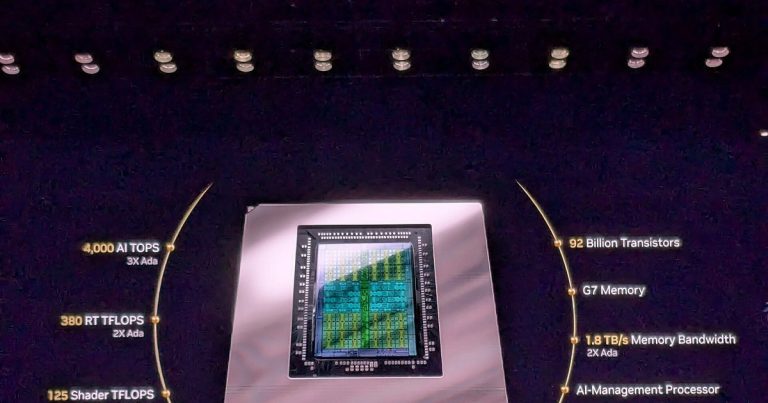
“Risk-off” means investors cutting their most speculative holdings first, and the numbers show it. The Nasdaq Composite fell 4.97% in a month to 25,366.09, bitcoin dropped 14.13% to about $71,355, and the dollar index rose 3.16% in three months to 103.17 (all Yahoo Finance, November 12). Add the leadership shock at Nvidia, covered in our story on Jensen Huang’s resignation; Nvidia is also one of the companies buying Anthropic shares in the private placement.
What that could mean for the final price
Bloomberg reported, via Yahoo Finance, that some prospective buyers discussed valuing Anthropic at $1.2 trillion to $1.3 trillion, some as low as $1.1 trillion, after the recent turmoil. That’s a report about negotiations, not a filing. The scenarios are simple: strong demand pushes pricing toward $78 or above it, while weak markets push it toward $70 or below it. Whether the turmoil shifts the November 18 and 19 timetable is still an open question.
What Anthropic’s S-1 says about the risks
The growth is the headline. Revenue for the nine months to September 30 was $33.2 billion, up 1,206% from a year earlier, per the amended filing as reported by Yahoo Finance. All of 2025 brought in $4.6 billion. First-half 2026 revenue was $16.3 billion, nearly 14 times a year earlier (ABC News).
Still losing money, and the losses are lumpy
The nine-month operating loss shrank to $1.3 billion from $5.2 billion a year earlier. The third quarter alone lost $536 million, which the filing ties to a $5 billion compute charge under short-term commitments and $2 billion of non-cash charges from a donation matching program. One-offs like these can swing a quarter, and new public shareholders will see every one.
$895.4 billion in spending commitments
This is the number I’d stare at longest. Anthropic has committed to $895.4 billion of spending, mainly compute and infrastructure, including $69.8 billion over the next 12 months and $447.5 billion before December 31, 2030 (Yahoo Finance). The next 12 months alone exceed the most this IPO can raise, $64.35 billion. Revenue has to keep compounding to carry that.
Risk factors in the company’s own words
ABC News quoted the preliminary prospectus: AI models could pose a “catastrophic or existential risk to humanity,” systems could “take harmful actions independently and at scale,” and safeguards “are incomplete.” The filing also flags a narrow customer base and tightening AI regulation. Most IPO risk sections read like boilerplate. These are worth reading in full.
Lock-ups and the Class N buyers
A lock-up is a period when insiders can’t sell. Here it’s the standard six months (Yahoo Finance), so expect a supply test around six months after November 19. Separately, Nvidia, Microsoft, Google, TSMC, Broadcom, AMD and Micron agreed to buy nonvoting Class N shares at the IPO price for about $26 billion more, and because that’s a private deal they aren’t under the usual lock-up. The Wall Street Journal reported, via Yahoo Finance, that Dario and Daniela Amodei and five other founders each plan to sell about $250 million of shares, keeping stakes worth around $18 billion each.
Do hot IPOs reward the people who buy them?
History is less exciting than day one. University of Florida professor Jay Ritter’s data, cited by Yahoo Finance, shows that of more than 9,000 US IPOs from 1975 to 2021, about 60% traded flat or lower three years after their first-day close.
Note the starting point: the first-day close, not the IPO price. Investors who got allocations at the offer price often did fine. People who bought after the first-day jump are the ones Ritter’s numbers describe. If you’re buying on November 19 rather than getting shares at $70 to $78, you’re in that second group, so your entry price matters more than the headline.
Mistakes to avoid when you buy Anthropic shares
I’ve made a couple of these myself on hyped listings, and they’re expensive in the same predictable way.
- Sending a market order into the opening auction and finding out the fill price the next morning.
- Counting on an allocation. Fund the account, request, and have a plan for getting zero.
- Raising your budget at midnight because the price is running. Decide the number while you’re calm.
- Buying something sold as “pre-IPO Anthropic” exposure on an unregulated platform. Before November 19 there’s no Nasdaq-listed ANT share, and those products may not give you the same rights.
- Forgetting currency cost. A poor exchange spread on a late-night conversion quietly adds to your entry price.
FAQ
What is Anthropic’s stock ticker?
The planned ticker is ANT, for Class A shares on the Nasdaq Global Select Market, according to Yahoo Finance and ABC News. Double-check the symbol in your broker app before you place an order.
When can I buy Anthropic stock?
Pricing is expected Wednesday, November 18, and trading is expected to start Thursday, November 19, subject to regulatory clearance. US investors can request IPO shares through participating brokers before pricing. Everyone else can usually buy once it trades.
Can I buy Anthropic stock on Robinhood?
Yahoo Finance reported that Robinhood is one of the online brokers, along with Schwab, Fidelity, E-Trade and SoFi, expected to share in up to 20% of the IPO set aside for retail. Allocations aren’t guaranteed, and each broker sets its own rules.
Can I buy Anthropic stock in Korea?
No source reports an IPO allocation for Korean retail investors. You can usually buy once ANT trades, through a broker that offers US stocks. No source confirms which Korean brokers will list it on day one, so ask yours.
How much will one Anthropic share cost?
The proposed range is $70 to $78, and the final IPO price isn’t set yet. On the first trading day the market price can be well above or below the IPO price. SpaceX closed its first day about 20% above its $150 offer.
Is Anthropic stock a good investment?
That depends on your goals, and nobody knows how ANT will trade. Weigh the fast revenue growth against the operating losses, $895.4 billion in spending commitments and the risk factors in the filing. Ritter’s data shows most IPOs trail their first-day close over three years.
What I’d watch before and after November 19
First, the November 18 price: top of the $70 to $78 range, the bottom, or outside it. That tells you more about real demand than any headline. Second, whether the timetable holds with the 10-year yield at 5.1% and Nvidia in turmoil. Third, the first ANT trade compared with the IPO price, and whether it looks more like SpaceX’s day or something calmer. After that, mark the lock-up expiry about six months out.
My own plan is boring on purpose: a limit order sized so a bad first week doesn’t hurt. This is not financial advice. Do your own research.
Related reading
Keep reading
Sources abcnews.com · finance.yahoo.com · sec.gov
This article is for information only and is not financial advice. Crypto assets are volatile; you can lose all of your money.