12 min read
Closing update (3:30 p.m. KST, November 13)
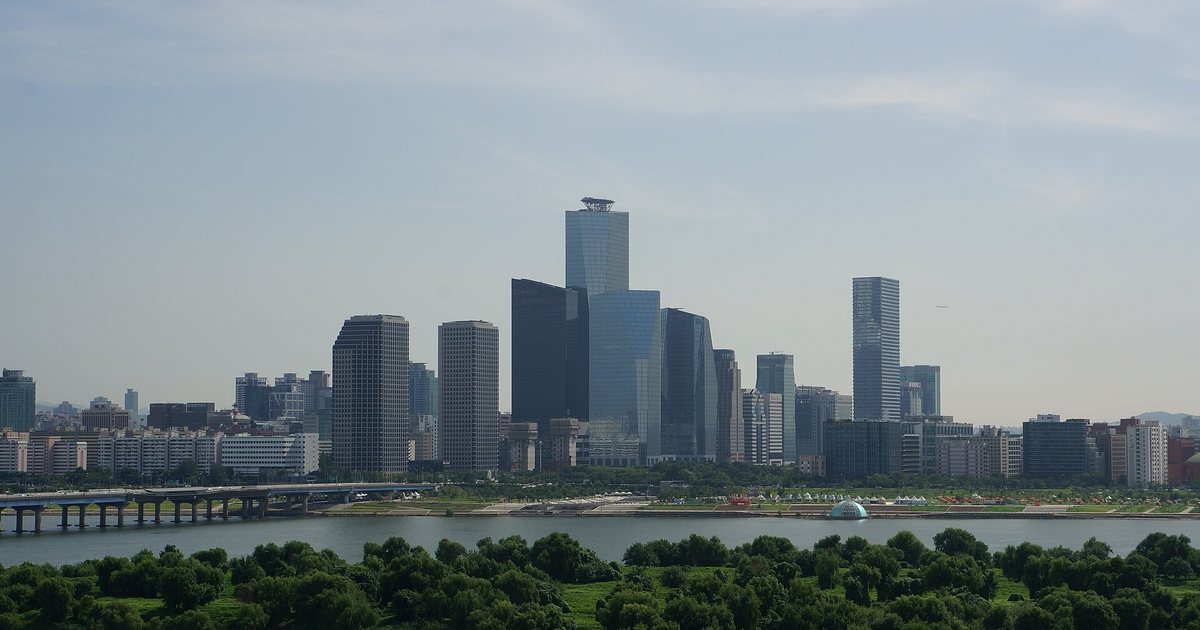
- The rally did not hold. The KOSPI closed at 5,290.53, down 52.20 points (-0.98%), after touching 5,504.44 intraday. The KOSDAQ closed up 0.45% at 699.66.
- Samsung Electronics closed at 206,000 won (-0.96%) and SK hynix at 1,216,000 won (-3.03%). 10,000,000 won of SK hynix bought at Thursday’s close was worth about 303,000 won less at Friday’s close.
- Foreign investors flipped from buying to selling around 11:40 a.m. (Money Today) and net sold about 550.5 billion won of KOSPI shares for the day (provisional). Individuals net bought about 17.5 billion won and institutions about 2 billion won.
- The intraday prices further down are kept exactly as they were reported in the morning, with their time stamps.
Sources: Aju Business Daily, Money Today, Naver Finance (KRX data)
Samsung SK hynix shares rose 3% to 4.63% intraday in Seoul on November 13, the day after Jensen Huang quit Nvidia. The KOSPI touched an intraday high of 5,504.44 (+3.03%, Herald Business) as foreign investors bought about 200 billion won of stocks. The market is treating this as an Nvidia management problem, not an AI demand problem, and Nvidia’s results on November 18 at 6:20 a.m. Korea time will test that view. Every Korean price below is intraday and carries its time stamp, because none of it is a closing price yet.
Key takeaways
- 10,000,000 won in SK hynix was up about 351,000 won at 9:21 a.m. (+3.51%, Seoul Economic Daily), and the gain had shrunk to +2.79% by 10:11 a.m. (Newspim).
- $10,000 in Nvidia was worth about $8,692 at the November 12 open (down 13.08%) and $9,566 at the close (down 4.34%), per Seoul Economic Daily and Herald Business.
- Foreigners net bought about 200 billion won of KOSPI stocks early on, while individuals net sold 276.2 billion won, their 5th straight session of selling (Herald Business).
- The deciding date is November 18 at 6:20 a.m. KST, when Nvidia reports third-quarter fiscal 2027 results (Nvidia, SEC Form 8-K).
Samsung SK hynix stock today: the intraday numbers, minute by minute
Seoul started strong and then gave some of it back, and the timestamps show it. Read these as snapshots. A price at 9:21 a.m. tells you nothing about 3:30 p.m.
KOSPI and KOSDAQ at the open
The KOSPI opened at 5,452.41, up 109.68 points or 2.05%, and climbed to an intraday high of 5,504.44 (+3.03%) early in the session, according to Herald Business. Seoul Economic Daily clocked it at 5,501.86 (+2.98%) at 9:12 a.m., the first intraday trade above 5,500 in six sessions. The KOSDAQ, the smaller growth-stock board, opened at 705.96 (+1.35%) and hit 717.43 (+3.00%).
By 02:09 UTC (11:09 a.m. in Seoul), Yahoo Finance showed the KOSPI at 5,446.05, up 1.32%. So the index was back under 5,500 before lunch. The rally was real, but it was already narrowing.
Samsung, SK hynix and the rest of the chip trade
Samsung Electronics was at 211,500 won (+1.68%) in pre-market trading at 8:03 a.m., then 214,250 won (+3.00%) at 9:21 a.m. per Seoul Economic Daily, and 213,000 won (+2.40%) at 10:11 a.m. per Newspim.
SK hynix ran hotter. The Korea Herald reported it up 4.63% at 9:15 a.m. Seoul Economic Daily had it at 1,298,000 won (+3.51%) at 9:21 a.m., and Newspim at 1,289,000 won (+2.79%) at 10:11 a.m. That fade from about 4.6% to about 2.8% in under an hour is the pattern I’d keep in mind before reading too much into the open.
The buying spread to other chip names. Samsung Electro-Mechanics rose 3.27% to 915,000 won and Samsung Electronics preferred shares rose 3.21% to 173,700 won at 10:11 a.m. (Newspim).
What happened to Nvidia in New York the night before?
Jensen Huang resigned as Nvidia’s CEO, president and director with immediate effect on November 12 (US time), and CFO Colette Kress became interim CEO, according to Nvidia’s press release filed with its SEC Form 8-K. I covered the handover itself in our piece on Kress stepping in.
Nvidia opened 13.08% lower and was at one point down more than 13-14%. Then buyers showed up. It closed down 4.34%, according to Seoul Economic Daily and Herald Business. Recovering roughly two-thirds of an opening drop in one session tells you the panic sellers ran into a lot of willing buyers.
Where the chip money went: AMD and Broadcom
The rest of the AI chip trade did not fall with Nvidia. AMD rose 5.86% and Broadcom 5.54% in the same session. The Philadelphia Semiconductor Index, a basket of US-listed chip stocks, slipped only 0.54%. The Nasdaq Composite fell 0.39% to 25,366.09 and the S&P 500 fell 0.35% to 7,592.40.
When a sector index barely moves while its biggest member swings 13% intraday, money is rotating inside the sector rather than leaving it. Traders call this idiosyncratic risk: risk tied to one company, as opposed to the whole industry.
Memory stocks fell in New York first
This is where the Seoul move gets interesting. In New York, Micron fell 1.59%, TSMC fell 1.90% and the SK hynix ADR (a US-traded receipt for the Korean shares) fell 3.19%. A few hours later the actual SK hynix shares in Seoul rose as much as 4.63%. Same company, opposite direction, one night apart. Korean buyers clearly had a different read from the US session’s last word on memory.
Samsung vs SK hynix vs Nvidia: the numbers side by side
Here’s the full chain in one place. The US numbers are November 12 closes unless marked. The Korean ones are November 13 intraday prints with their times.
| Asset | Move | Level | When | Source |
|---|---|---|---|---|
| Nvidia | -13.08% open, -4.34% close | n/a | Nov 12, New York | Seoul Economic Daily, Herald Business |
| AMD | +5.86% | n/a | Nov 12 close | Seoul Economic Daily |
| Broadcom | +5.54% | n/a | Nov 12 close | Seoul Economic Daily |
| SK hynix ADR | -3.19% | n/a | Nov 12 close | Seoul Economic Daily |
| Micron | -1.59% | n/a | Nov 12 close | Seoul Economic Daily |
| Samsung Electronics | +3.00% | 214,250 won | Nov 13, 9:21 a.m. | Seoul Economic Daily |
| Samsung Electronics | +2.40% | 213,000 won | Nov 13, 10:11 a.m. | Newspim |
| SK hynix | +3.51% | 1,298,000 won | Nov 13, 9:21 a.m. | Seoul Economic Daily |
| SK hynix | +2.79% | 1,289,000 won | Nov 13, 10:11 a.m. | Newspim |
| KOSPI | +3.03% (high) | 5,504.44 | Nov 13, early session | Herald Business |
| KOSPI | +1.32% | 5,446.05 | Nov 13, 11:09 a.m. KST | Yahoo Finance |
Why did Korean chip stocks go up when Nvidia went down?
The short answer from the Korean press: uncertainty eased. Newspim and Seoul Economic Daily both described investors treating Huang’s exit as a risk specific to Nvidia, not a sign that AI or GPU demand is breaking. That’s a reported interpretation, not a fact anyone can verify on day one, but the US tape supports it. AMD and Broadcom don’t jump more than 5% on a day when investors think AI spending is about to crack.
A CEO risk versus a demand risk
Separating the two helps here. A CEO change raises questions about strategy, culture and execution at one company. A demand problem would mean data centers ordering fewer chips, and that would hit every supplier. Samsung and SK hynix sell memory into the AI build-out, so their fortunes hang on the second question far more than the first. Nobody has reported that Nvidia changed any memory orders, and neither Samsung nor SK hynix commented on the resignation.
Foreign buying is spreading beyond chips
Kiwoom Securities analyst Han Ji-young said foreign investors are broadening their buying beyond chips into banks, shipbuilding, autos and machinery, and that net selling pressure is easing, according to Seoul Economic Daily. If that holds, the rally rests on a wider base than two chip stocks, which makes it a bit sturdier.
One side story: Investing.com reported that Samsung was said to be in talks to acquire data-center cooling company Modine. Samsung has not confirmed it, so I wouldn’t treat it as a reason for anything yet.
Who was buying the KOSPI on November 13?
The flow numbers from Herald Business tell a clear story. Foreign investors net bought about 200 billion won early in the session, their fourth straight session of buying. Institutions added 50.6 billion won. Individuals net sold 276.2 billion won, their fifth straight session of selling.
Why individuals keep selling into the bounce
Look at where the index has been. Yahoo Finance data puts the KOSPI down 9.37% over one month and down 20.07% over three months, even after this bounce. Plenty of retail holders who bought higher are using green days to get out closer to breakeven. That’s a normal reaction after a drawdown, and it means every rally has to absorb steady selling from home.
Foreign money tends to move faster and in bigger blocks. When it has bought for four sessions running, the question for the next week is simple: does it keep coming? A reversal in that 200 billion won line would matter more for Samsung and SK hynix than anything said about Huang.
How yields, the dollar and the won feed this rally
A chip rally in Seoul doesn’t happen in a vacuum. It runs through rates and currencies first.
A 5.1% Treasury yield is the backdrop
The US 10-year Treasury yield stood at 5.1% on November 12 (Yahoo Finance), up 2.1% on the day, and the effective fed funds rate was 3.88% on November 10 (New York Fed). High yields make stocks with long growth stories harder to justify, because a safe bond pays you 5% to wait. That pressure is part of why the Nasdaq is down 4.97% over a month (Yahoo Finance). Korean chip stocks bounced against that headwind, not with a tailwind behind them.
A stronger won helps foreign buyers twice
The won traded at 1,336.5 per dollar at 9:15 a.m., 0.7 won stronger than the previous close (Korea Herald), and Yahoo Finance showed 1,331.88 by mid-morning. For a dollar-based fund, a firmer won adds a small currency gain on top of any share-price gain. That’s one reason foreign buying and a firmer won often show up on the same day. The US dollar index sat at 103.14 (Yahoo Finance), up 3.13% over three months, so the won’s strength this morning came against a dollar that has been firming broadly.
What the Samsung and SK hynix rally means for your money
If you hold Korean chip stocks or a KOSPI fund, this morning was a relief. If you hold Nvidia, November 12 was a day where the open was far worse than the close. Either way, the swings show how fast a single headline can move a position, and how fast it can partly reverse.
By the numbers
- A 10,000,000 won SK hynix position at the prior close was up about 351,000 won at 9:21 a.m. on November 13 (+3.51%, Seoul Economic Daily).
- $10,000 of Nvidia at the November 11 close was worth about $8,692 at the November 12 open, when shares opened 13.08% lower.
- The same $10,000 was worth about $9,566 at the November 12 close (down 4.34%), so an investor who panicked at the open locked in an $874 bigger loss than one who waited.
- At 1,336.5 won per dollar (Korea Herald, 9:15 a.m. November 13), $10,000 converts to about 13,365,000 won.
How we calculated: the percentage moves are Seoul Economic Daily and Herald Business figures for November 12 (New York) and November 13 (Seoul, 9:21 a.m.), the exchange rate is the Korea Herald’s 9:15 a.m. November 13 quote, and the $874 gap is $9,566 minus $8,692.
A worked example across both markets
Say you hold $10,000 of Nvidia and 10,000,000 won of SK hynix. At the US open your Nvidia stake was worth about $8,692. By the US close it was back to about $9,566.
The next morning your SK hynix stake was up about 351,000 won at 9:21 a.m. Converted at 1,336.5, that’s roughly $263. Your two-stock AI bet ended the 24 hours down far less than the headline “Nvidia opens 13% lower” suggested. That cushion only works if the two stocks keep moving differently, and nobody knows yet whether they will after the earnings report.
What has happened before: the November 6 circuit breaker
This bounce comes one week after a much uglier day. Seoul Economic Daily reported that on November 6 the KOSPI fell more than 8% after the open, triggering a circuit breaker (an automatic trading halt when an index drops too far, too fast) and briefly dipped below 5,000. Back then I asked whether KOSPI 5,000 was slipping away.
From a sub-5,000 dip to an intraday 5,504.44 in five sessions is a big swing. It also tells you how jumpy this market is. An index that can drop 8% in a morning and gain 3% a week later is one where position size matters more than usual.
Risks and common mistakes after a headline rally
I’ve made the mistake of chasing a morning rally before. It usually feels smartest at 9:15 a.m. and dumbest by the close.
Reading intraday highs as the result
The 5,504.44 high and the 4.63% SK hynix gain are peaks, not outcomes. Closing prices for November 13 were not available when this was written. By 11:09 a.m. the KOSPI was up 1.32%, less than half its early gain.
Assuming the Nvidia story is finished
Nvidia has an interim CEO and an earnings report four days away. If Kress’s first call as interim CEO raises any doubt about demand or supply plans, the “Nvidia-specific risk” story can flip into a sector risk story. The market priced the good version this morning.
Over-concentration in one theme
Owning Nvidia, SK hynix, Samsung and a Korean index fund can feel diversified. It’s mostly one bet on AI hardware spending. The KOSPI’s 20.07% three-month drop (Yahoo Finance) shows what happens when that theme cools.
What I’d watch next: Nvidia’s November 18 report in Korea time
Nvidia reports third-quarter fiscal 2027 results on Tuesday, November 17 at about 1:20 p.m. PT, which is 6:20 a.m. KST on Wednesday, November 18 (Nvidia, 8-K). That lands before the Seoul open, so Korean chip stocks will react to it first thing. I laid out the numbers to watch in our Nvidia earnings preview without Huang.
Before then, three things will tell me whether this morning was a turn or a bounce. First, whether Samsung and SK hynix hold any of their gains into the November 13 close. Second, whether foreign investors post a fifth straight session of net buying. Third, what Kress says on the call about demand and suppliers, since that’s the first time the market hears from Nvidia’s new leadership on the business.
None of these questions has an answer yet. This is not financial advice, so do your own research before you act on any of it.
FAQ
Why did SK hynix stock go up after Jensen Huang resigned?
Korean outlets Newspim and Seoul Economic Daily reported that investors saw Huang’s exit as a risk specific to Nvidia rather than a sign that AI chip demand is weakening. SK hynix rose as much as 4.63% at 9:15 a.m. (Korea Herald) and was up 2.79% at 10:11 a.m. (Newspim). Foreign buying of about 200 billion won across the KOSPI also helped.
Did Samsung or SK hynix comment on Huang’s resignation?
No. Neither company commented, according to the reports available. No source says Nvidia changed any memory orders either, so be wary of anyone claiming otherwise.
Did the KOSPI close above 5,500 on November 13?
Closing figures were not available when this was written. The index hit an intraday high of 5,504.44 early in the session (Herald Business), and Yahoo Finance showed it at 5,446.05 (+1.32%) at 11:09 a.m. KST.
When does Nvidia report earnings in Korea time?
Nvidia reports third-quarter fiscal 2027 results on November 17 at about 1:20 p.m. Pacific time. In Korea that’s 6:20 a.m. on November 18, before the Seoul market opens.
Who is running Nvidia now?
CFO Colette Kress is interim CEO after Huang resigned as CEO, president and director on November 12, per Nvidia’s press release filed with its SEC Form 8-K. The earnings call on November 17 will be the market’s first long look at her as interim CEO.
Why did Nvidia fall but AMD and Broadcom rise?
On November 12 Nvidia closed down 4.34% while AMD gained 5.86% and Broadcom 5.54%, and the Philadelphia Semiconductor Index fell only 0.54%. That pattern suggests money moved within the AI chip group rather than out of it. Korean chip stocks followed the same logic the next morning.
Related reading
Keep reading
Sources ajunews.com · mt.co.kr · finance.naver.com · biz.heraldcorp.com · en.sedaily.com · newspim.com · koreaherald.com · sec.gov
This article is for information only and is not financial advice. Crypto assets are volatile; you can lose all of your money.