7 min read
At $75,835 per Bitcoin, how you store your keys matters as much as which coin you bought. The short answer to hot wallet vs cold wallet: a hot wallet (software on a phone or computer that’s online) is for money you spend or trade, and a cold wallet (keys kept offline, usually on a hardware device) is for money you plan to hold. Most people end up using both and splitting funds by amount.
Key takeaways
- Bitcoin trades at $75,835 in our market data, so even 0.1 BTC (about $7,584) sitting behind one private key is worth protecting properly.
- Solana is down 19.28% and XRP 16.84% over 30 days in our market data. Volatile weeks are when people rush transfers and make mistakes.
- Tether (USDT) had $18.3 billion in 24-hour volume in our market data, more than Bitcoin’s $10.4 billion. Most of that money sits on exchanges and in hot wallets.
- Under the BIP39 standard, a wallet’s seed phrase is 12 or 24 words. Whoever has those words owns the funds, whichever wallet type you use.
Hot wallet vs cold wallet: what’s actually different?
Neither one holds your coins. The coins sit on the blockchain. A wallet holds the private key that signs transactions, and the only real question is where that key is when it signs.
With a hot wallet, the key lives on a device that’s online. That’s why it’s fast, and it’s also why one bad browser extension, a fake airdrop site or a malicious token approval can empty it. With a cold wallet, the key is created on a dedicated device and never leaves it. Your computer builds the transaction, the device signs it, and only the signature goes back out. Malware on your laptop can’t read the key, though it can still try to trick you into approving something.
There’s a third option, and it’s the one most people really use: an exchange account. There you don’t hold a key at all. You hold a claim on the exchange.
| Factor | Exchange account | Hot wallet | Cold wallet |
|---|---|---|---|
| Who holds the private key | The exchange | You, on an online device | You, on an offline device |
| Internet exposure of the key | Exchange’s systems | Constant | None during normal use |
| Most common way people lose funds | Exchange failure, account freeze, hacked login | Phishing, malware, malicious approvals | Lost or leaked seed phrase, signing a scam on the device |
| Speed to send | Fast, but withdrawals can be paused | Seconds | A minute or two (plug in, confirm on screen) |
| Cost to start | Free | Free | You buy a device |
| Works with DeFi and staking | Only the exchange’s own products | Yes, directly | Yes, when paired with a hot wallet app as the signer |
| Best for | Buying, selling, cashing out | Spending money, active DeFi | Long-term holdings |
Why does storage matter more when prices swing?
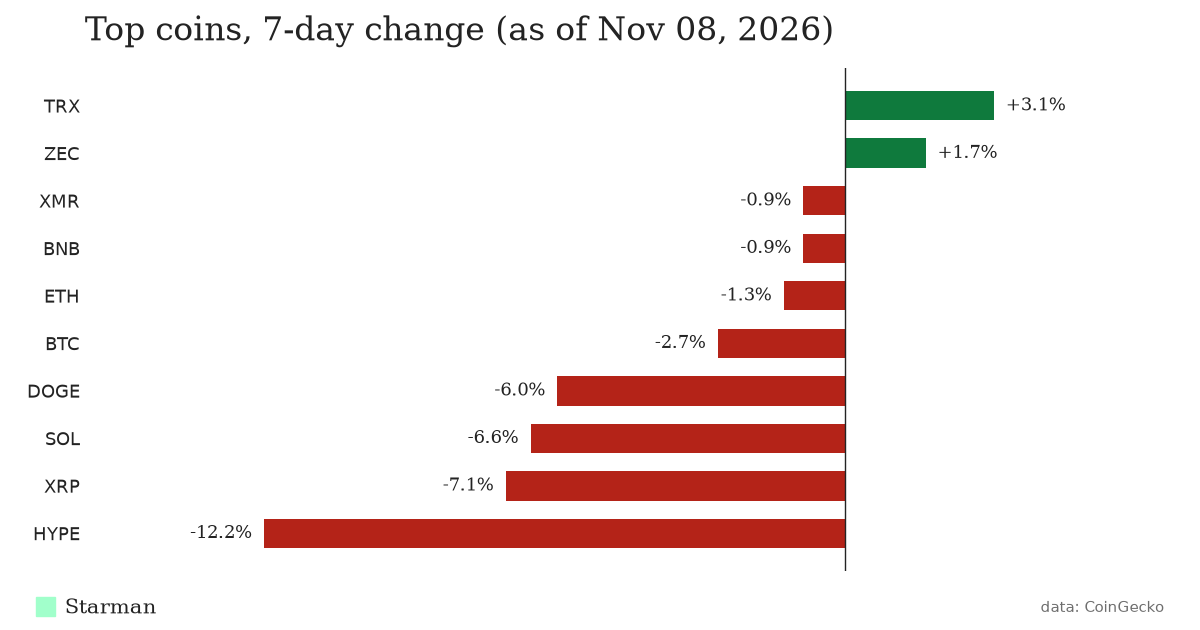
A falling price hurts, but you still own the coins. A drained wallet is gone, and nobody can reverse the transaction. Here’s what common position sizes are worth right now and how much they moved, from our market data:
| Holding | Value today | 7-day change | 30-day change |
|---|---|---|---|
| 0.1 BTC | $7,583.50 | -2.67% | -8.03% |
| 1 ETH | $2,236.42 | -1.29% | -10.37% |
| 10 SOL | $890.60 | -6.59% | -19.28% |
| 1,000 XRP | $1,160.00 | -7.11% | -16.84% |
| 1,000 USDT | $998.94 | -0.06% | -0.03% |
Weeks like this one make people nervous. Nervous people move funds in a hurry, paste addresses without checking them, and click “support” links in Telegram DMs. In my experience most losses don’t come from clever hacks. They come from tired people rushing.
Stablecoins deserve a mention too. USDT barely moved (-0.03% over 30 days), so people treat it like cash and leave large balances in hot wallets. Price stability does nothing against theft, though. A drained stablecoin wallet is the same loss as a drained Bitcoin wallet.
When is a hot wallet the right choice?
Use a hot wallet when you need the money to move. Browser and mobile wallets like MetaMask or Phantom are how you use DeFi apps, mint, swap, and stake directly on-chain (if staking is new to you, here’s how staking rewards actually work).
My rule: a hot wallet should only hold an amount you’d be annoyed to lose, not one that would wreck you. I learned that split the annoying way back in the 2017 cycle, when everything I owned sat in one browser wallet on the same laptop I used for everything else.
The risk people underestimate isn’t someone “hacking” the wallet. It’s token approvals. When you sign an unlimited approval for a contract, that contract can move that token later without asking you again. Go through your approvals now and then and revoke the ones you no longer use. Our security checklist after the Gnosis Pay and Binance incidents covers this step by step.
When does a cold wallet earn its place?
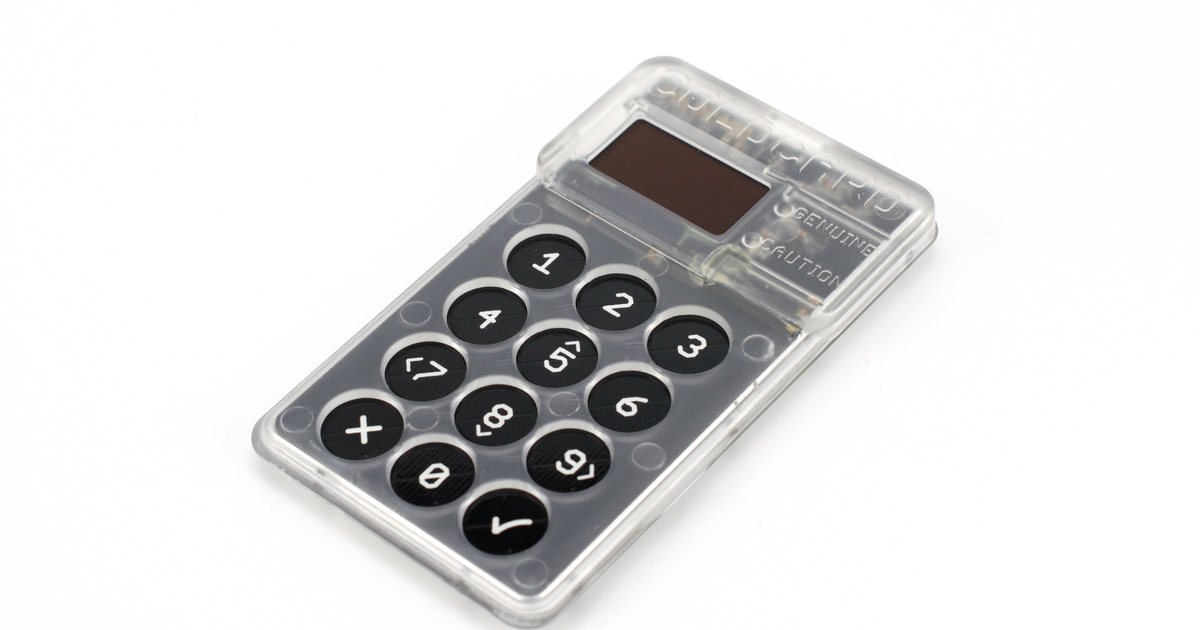
Once an amount would really hurt to lose, it belongs offline. A hardware wallet (Ledger, Trezor and similar devices) generates your seed phrase on the device and shows each transaction on its own screen, so you can check the receiving address and amount somewhere malware can’t fake.
A cold wallet is only as safe as your habits, though. Three things undo it:
- Typing your 12 or 24 seed words into any website, app or “wallet sync” form. A legitimate service will never ask for them.
- Storing the phrase as a photo, a cloud note or an email to yourself. That puts your cold key straight back online.
- Buying the device second-hand or from a marketplace reseller, where it could be tampered with. Buy directly from the manufacturer.
Most hardware wallets also support an optional passphrase (sometimes called the “25th word”). It adds real protection if someone finds your seed phrase, but if you forget the passphrase, nobody can recover the funds. I’d only turn it on once you’re comfortable with the basics.
Is leaving crypto on an exchange ever fine?
For short stretches, yes. You need an exchange to buy, sell and move money to your bank, and big exchanges run serious security teams. The risk isn’t so much getting hacked as losing access. When FTX collapsed in November 2022, customers couldn’t withdraw. Exchanges also freeze or close accounts over regulation, as European users are seeing now (our guide on Binance account closures in Europe walks through moving funds out).
I treat an exchange balance as money in transit. If it’s going to sit there for months, it should probably be somewhere you control.
Which would I pick for each situation?
You just bought a little Bitcoin to try it out. Keeping it on a large exchange with app-based two-factor authentication (not SMS) is reasonable for now. Once the balance would hurt to lose, move it to a hardware wallet.
You use DeFi every week. Keep working capital in a hot wallet. For bigger positions, connect a hardware wallet to the same app as the signer, so every approval has to be confirmed on the device. It’s slower, and that’s the point.
You’re holding for years. Go cold. Write the seed phrase on paper or stamp it into metal, keep copies in two separate places, and run a recovery test with a small amount before you trust the setup with everything.
You mostly hold stablecoins. The 1,000 USDT in the table above is still about $999, so the risk is custody, not price. Keep in mind that issuers like Tether can freeze tokens at specific addresses. Self-custody shields you from exchange failure, not from issuer freezes.
A simple setup that covers most people
- Buy a hardware wallet directly from the manufacturer’s official site.
- Set it up offline, write the seed phrase down by hand, and never photograph it.
- Send a small test amount, then do a practice recovery on the device before moving the rest.
- Keep a separate hot wallet for daily use and refill it from cold storage when you need to.
- Every month or two, revoke token approvals you no longer use.
- Leave a note for a trusted person explaining that the crypto exists and where to find instructions, without writing out the seed phrase itself.
FAQ
Is a cold wallet 100% safe?
No. It removes the biggest risk, which is your private key being exposed online, but you can still lose funds by leaking the seed phrase or approving a malicious transaction on the device. Physical loss isn’t a problem if your seed phrase backup is safe, because you can restore the wallet on a new device.
Can I use a hot wallet and a cold wallet at the same time?
Yes, and most experienced holders do. Many hot wallet apps let you connect a hardware wallet as the signer, so you get the app’s interface while the key stays on the device. You can also keep separate accounts for spending and holding.
What happens if my hardware wallet company goes out of business?
Your coins aren’t stored with the company. They’re on the blockchain, and your seed phrase (usually following the BIP39 standard) can restore them in other compatible wallets. That’s one more reason the written backup matters more than the device.
Is a paper wallet a cold wallet?
Technically yes, since the key is offline, but paper wallets are clumsy and easy to get wrong when you spend from them. For most people, a hardware wallet with a written seed backup is the safer and easier way to keep crypto offline.
What I’d do this week if I were you
Add up how much you hold in each place: exchange, hot wallet, cold storage. If the exchange or hot wallet number is bigger than you’d be comfortable losing, fix that first, starting with a small test transfer. Then check your token approvals.
With SOL down 6.59% and XRP down 7.11% over the past week in our market data, plenty of people are moving funds right now, and scammers know it. This is not financial advice. Do your own research.
Related reading
This article is for information only and is not financial advice. Crypto assets are volatile; you can lose all of your money.