12 min read
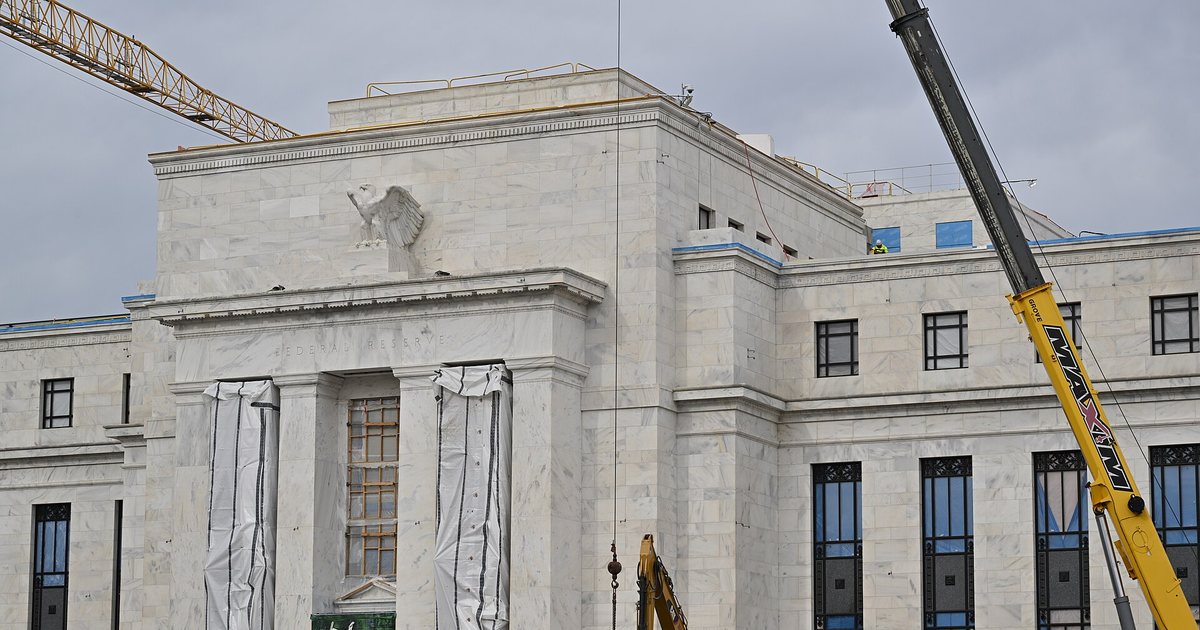
Fed rate hike odds hit 96% this week, per Cointelegraph, after Governor Waller’s speech. For Korean investors the damage is already visible: KOSPI is down 17.94% in a month even after a 4.39% jump on November 10 to 5,239.13 (Yahoo Finance). Your bank deposits are safe. What changes is the price of risk, the rate you convert won at and, over time, what you pay on a variable loan.
Key takeaways
- 10,000,000 won in a KOSPI tracker a month ago is now worth about 1,794,000 won less (KOSPI -17.94% in a month, Yahoo Finance, November 10).
- Traders put 96% odds on a December Fed hike (Cointelegraph), and the effective fed funds rate is already 3.88% (New York Fed, November 6).
- A dollar buys 4.87% fewer won than 3 months ago (USD/KRW 1,338.49, Yahoo Finance), so 10,000,000 won in an S&P 500 fund shrank to about 9,263,759 won.
- If a half-point rise like the one Waller left open ever reached a 300,000,000 won variable mortgage, it would cost 1,500,000 won more a year.
Why are Fed rate hike odds at 96% right now?
The trigger was Fed Governor Waller. CNBC reported on November 10 that he sees a December hike as likely and left the door open to a half-point increase, meaning 0.50 percentage points instead of the usual 0.25. The same day, CoinDesk wrote that traders had priced in a December hike, and Cointelegraph put the bets at 96%.
That’s a big turn for a central bank whose effective policy rate is 3.88% (New York Fed, November 6). If the Fed hikes from here, it’s telling you inflation hasn’t cooled enough for its comfort.
What pushed the Fed toward a December hike?
Two data points matter. CNBC ran a piece explaining why the October jobs report was so strong, and a strong job market lets the Fed tighten without worrying that it will cause a recession first. The second is the October CPI report, due on Tuesday, November 10. A hot number would make a hike look close to certain and put the half-point option in play.
I covered what to expect from that release in our October CPI preview. For Korean readers the short version is this: a hot print pushes US yields and the dollar up, and both reach Seoul within hours.
Why the bond market looks calmer than the stock market
The odd detail is that bonds haven’t panicked. The US 10-year Treasury yield is 4.86%, and that level is 7.18% lower than a month ago (Yahoo Finance). The dollar index, at 101.75, is down 0.81% over the month. The stress has gone into stocks instead, especially tech-heavy ones.
My read: the market is pricing a short, sharp tightening rather than a long hiking cycle. Nobody knows yet whether that holds up after the CPI print.
How does a US rate hike hit KOSPI?
The chain has four steps, and Korea sits near the end of it.
- The Fed raises its policy rate, and short-term US Treasury yields climb with it.
- Dollar assets now pay more, so global money gets pickier about riskier markets.
- Foreign funds, which own a large share of Korea’s biggest listed companies, trim positions and convert won back into dollars.
- KOSPI falls and the won comes under pressure, often on the same day.
If you want the plumbing behind those steps, our guide to reading economic indicators walks through yields, the dollar index and the policy rate.
Why did KOSPI fall more than Wall Street?
Put the moves side by side and the Fed turns out to be only part of the story.
| Market | Level | 1 day | 1 month | 3 months |
|---|---|---|---|---|
| KOSPI | 5,239.13 | +4.39% | -17.94% | -16.83% |
| USD/KRW | 1,338.49 won | -1.78% | -0.18% | -4.87% |
| S&P 500 | 7,549.94 | +2.35% | -3.3% | -2.62% |
| Nasdaq Composite | 25,253.14 | +2.74% | -7.31% | -5.08% |
| Nikkei 225 | 60,459.58 | +2.87% | -10.8% | -9.72% |
| DAX | 26,586.69 | +1.22% | +5.18% | +1.0% |
| US 10-year yield | 4.86% | +0.1% | -7.18% | +3.51% |
| US dollar index | 101.75 | +0.1% | -0.81% | +1.95% |
| Gold | $4,081.40 | -0.8% | -2.61% | -7.65% |
| Bitcoin | $74,309.33 | -1.21% | -11.2% | +16.27% |
Source: Yahoo Finance. US indexes and the 10-year yield as of November 9, everything else November 10. Yield changes are relative changes in the yield level.
Germany’s DAX is up 5.18% in a month and the Dow is up 1.04%. If this were only about the Fed, those wouldn’t be green. The losers are the markets packed with chip and AI stocks: KOSPI, the Nikkei and the Nasdaq.
The AI trade has looked shaky. MarketWatch reported that Anthropic retracted IPO terms it had sent to banks by mistake, and framed the episode as exposing jitters over AI investments. Then a rate hike raises the discount rate, the rate used to turn future profits into today’s value. The further out a company’s profits are, the more a higher rate cuts what they’re worth now, and chip and AI stocks are priced almost entirely on future profits.
What the 4.39% bounce does and doesn’t tell you
KOSPI’s 4.39% jump on November 10 followed a 2.35% gain in the S&P 500 and 2.74% in the Nasdaq the session before. That’s a relief rally, a sharp rebound once forced and panicked selling runs out. The monthly loss of 17.94% already includes that bounce. After a fall that size, you need a gain of more than 20% just to get back to even.
What does a Fed rate hike mean for the won-dollar exchange rate?
The won actually got stronger on the day hike odds jumped. USD/KRW traded at 1,338.49 on November 10, down 1.78% on the day, and a dollar buys 4.87% fewer won than it did three months ago (Yahoo Finance).
Two forces explain it. The broad dollar is soft, with the dollar index down 0.81% in a month. And on a risk-on day, when investors go back into stocks, foreign money flows into Korean shares and the won firms up with them. The Fed pushes the won down, risk appetite pushes it up, and lately risk appetite has won the day-to-day fight.
Oil is a quiet help. WTI crude is $85.57, down 8.72% in a month (Yahoo Finance), after President Trump said the Iran war would end “fairly soon” (CNBC). Korea imports almost all its crude, so cheaper oil means fewer dollars leaving the country and less imported inflation.
Can the won weaken again if the Fed hikes by half a point?
Yes, and that’s the scenario I’d plan around. A 0.50-point move is bigger than markets usually get. A surprise that size tends to set off risk-off trading, when investors dump anything volatile and park cash in dollars and Treasuries. Emerging Asian currencies usually take the hit.
We’ve seen this before. In 2022, when the Fed raised rates at its fastest pace in decades, the won slid hard against the dollar and KOSPI had a bad year. The starting point today is different, with the won stronger over three months, but the mechanism hasn’t changed.
What changes if you hold US stocks or ETFs from Korea?
You carry two risks at once: the asset’s price in dollars and the exchange rate. Over the past three months both went against Korean holders of an S&P 500 fund. The index fell 2.62% in dollars, and the dollar lost 4.87% against the won. Put those together and 10,000,000 won invested three months ago is worth about 9,263,759 won today before fees, a far bigger loss than the index alone shows.
The S&P 500 index fund guide covers the fund side. On the currency side, a Fed hike that sends the dollar back up would reverse part of that loss. I learned years ago that I can’t time currency moves. What I can do is know which of the two risks I’m actually holding.
Did the KOSPI circuit breaker trigger? Why Koreans are searching
Google Trends shows Korean searches for “코스피 서킷 브레이커” (KOSPI circuit breaker) up 900%, “1 달러 환율” (the one-dollar exchange rate) up 250%, and “코스피 5000” up 450%. People look up circuit breakers when a fall feels violent enough to stop the market. My figures show the 17.94% monthly drop but not whether a halt fired, so I won’t claim one did.
How a KOSPI circuit breaker works
A circuit breaker is an automatic, market-wide pause in trading. It kicks in when the index falls a set percentage from the previous day’s close. The Korea Exchange runs it in stages: the early stages pause trading for a set number of minutes, and the final stage ends the session for the day. A sidecar is the smaller version, a short hold on program trading when futures swing sharply.
A halt freezes trading, but it doesn’t change what you own. It gives everyone time to think. The worst decisions I’ve seen, one of mine included, were made in the first hour after a crash.
Why forced selling makes Korean drops deeper
Another rising query asks about the cause of the KOSPI plunge and steps to ease 반대매매. That’s the forced sale a broker makes when your margin loan or unsettled purchase is no longer covered. In a falling market these forced sales feed each other, which is how a bad week becomes a 17.94% month. I don’t have confirmed details of any relief measures, so check your broker’s notices directly instead of relying on screenshots.
What a US rate hike means for Korean loans and deposits
The Fed doesn’t set Korean loan rates. Those depend on the Bank of Korea, Korean bond yields and bank funding costs such as COFIX, the cost-of-funds index many variable mortgages are tied to. The Fed does limit the Bank of Korea’s room to move, though. Cutting while the Fed hikes widens the rate gap between the two countries, and a wider gap can pull money out and weaken the won. Nobody knows yet how the Bank of Korea will respond, and I’m not going to guess.
Variable-rate borrowers: the stress test to run
Take a move the size Waller floated, 0.5 points, and assume your lender passed it through. On a 300,000,000 won variable mortgage, that’s 1,500,000 won more interest a year, or 125,000 won a month. It might never reach you at that size. It’s still the test I’d run on a household budget before December.
Savers: your deposit is safe, the rate is the open question
Money in a Korean bank is covered by deposit insurance up to the legal limit per bank, and a Fed hike doesn’t change that. Tighter US policy does make it harder for Korean deposit rates to fall quickly. If you’re choosing between locking in a fixed-term deposit now and waiting, the CPI print and the December Fed decision are the two events most likely to change the answer.
By the numbers
- A 10,000,000 won KOSPI tracker lost about 1,794,000 won over the month to November 10, 2026 (KOSPI -17.94%, Yahoo Finance), even counting that day’s bounce.
- 10,000,000 won in an S&P 500 fund three months ago is worth about 9,263,759 won now: the index fell 2.62% and USD/KRW fell 4.87% (Yahoo Finance, November 9-10, 2026).
- A half-point rise (1 percentage point divided by 2), the size of the hike Waller said was possible (CNBC, November 10, 2026), adds 1,500,000 won a year to a 300,000,000 won variable mortgage.
- That works out to 125,000 won more every month.
How we calculated: the KOSPI, S&P 500 and USD/KRW changes come from Yahoo Finance as of November 9-10, 2026, the half-point rise (1 percentage point divided by 2) is the hike size Fed Governor Waller called possible (CNBC, November 10, 2026), and the 10,000,000 won and 300,000,000 won amounts are round examples, before fees, taxes and dividends.
Fed rate hike odds and bitcoin: why crypto lagged the bounce
CoinDesk reported on November 10 that bitcoin lagged the stock rebound ahead of the inflation report. Bitcoin is at $74,309.33 (Yahoo Finance, November 10), down 11.2% in a month, and ether at $2,093.36 is down 16.43% over 30 days (CoinGecko). Total crypto market value is about $2.47 trillion, down 2.52% in 24 hours.
Rate fear hits crypto directly. Bitcoin pays no interest, so it has to compete with a 10-year Treasury yielding 4.86%. Big holders are also selling. Cointelegraph counted $1.66 billion in outflows from BlackRock’s bitcoin ETF over seven trading sessions, and CoinDesk reported that miner MARA sold 13,597 BTC for $1.1 billion in six weeks and plans to sell more.
Bitcoin in won: the currency layer Korean holders forget
Korean exchanges quote bitcoin in won, so a stronger won pulls the won price down even when the dollar price is flat. Over three months, though, bitcoin is still up 16.27% in dollars, which is why many Korean holders feel less pain than the 30-day chart suggests. Our weekly crypto market note tracks how the altcoins are doing below bitcoin.
December Fed scenarios: hold, quarter point or half point
The December decision comes in three realistic shapes. None comes with a price target, but each pushes the won, KOSPI and crypto in a fairly predictable direction.
| December outcome | What it would signal | Likely pull on the won | Likely pull on KOSPI and crypto |
|---|---|---|---|
| Hold at 3.88% effective | Fed thinks inflation is cooling on its own | Softer dollar, firmer won | Relief rally has room to extend |
| 0.25-point hike | What most traders behind the 96% odds expect | Small move, largely priced in | Focus shifts to the Fed’s guidance for 2027 |
| 0.50-point hike | Fed worried inflation is sticky, as Waller hinted | Risk-off, dollar up, won weaker | Pressure on chip-heavy KOSPI, the Nasdaq and bitcoin |
The quarter-point outcome is the least dramatic because it’s already priced in. The half-point case is the one that moves Korean wallets, because it hits stocks, the currency and crypto at the same time.
Common mistakes Korean investors make when the Fed turns hawkish
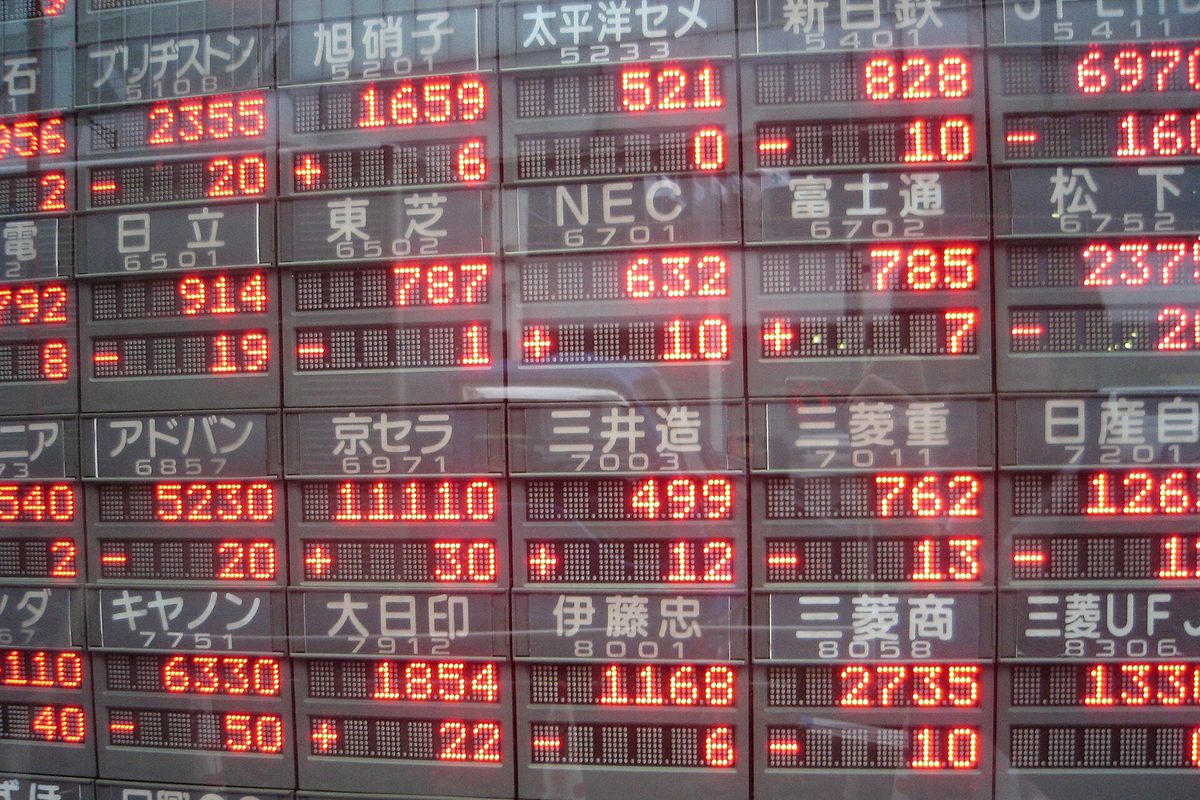
Selling on the scariest day tops the list. Searches for a circuit breaker spike when fear peaks, and then KOSPI jumps 4.39% the next session. Anyone who sold at the low and bought back after the bounce paid twice.
Reading US ETF returns in dollars comes next. Your account is in won, and a 4.87% three-month currency move outweighs the 2.62% the S&P 500 lost over the same period.
Margin is the mistake that does real, lasting damage. Forced selling doesn’t wait for a rebound, and in a month like this one it turns paper losses into realized ones.
The last one is treating a single green day as the all-clear. The 10-year yield, the dollar index and the CPI report decide whether the bounce lasts. One day’s move doesn’t.
What I’m watching next on Fed rate hike odds
- October CPI, Tuesday, November 10: a hot number makes the half-point option real; a soft one takes some of the 96% odds off the table.
- The December Fed meeting: whether the move is 0.25 or 0.50, and what the Fed says about 2027.
- USD/KRW around 1,338.49: if the won gives back its 1.78% one-day gain, foreign money is leaving again.
- The US 10-year at 4.86%: a climb from here would tell you the bond market has started to believe in a longer hiking cycle.
- Bitcoin ETF flows: the $1.66 billion BlackRock outflow streak needs to stop before crypto gets a real rebound.
This is not financial advice. Do your own research before you change anything in your accounts.
FAQ
What are the odds of a US rate hike in December 2026?
Cointelegraph reported that bets on a Fed hike hit 96% after Governor Waller’s speech on November 10. Waller said a December hike looks likely and didn’t rule out a half-point move (CNBC). The October CPI report could still shift those odds.
Why does a US rate hike affect KOSPI?
Higher US rates make dollar assets more attractive, so foreign investors pull money from riskier markets like Korea. KOSPI is also heavy in chip stocks, which are valued on future profits and lose more when rates rise. That’s part of why KOSPI fell 17.94% in a month while the S&P 500 fell 3.3% (Yahoo Finance).
Will the won weaken if the Fed raises rates?
It can, especially if the hike is larger than expected and sets off risk-off selling. Right now the won is stronger: USD/KRW is 1,338.49, down 4.87% over three months (Yahoo Finance). A half-point surprise is the scenario most likely to reverse that.
Does a Fed hike raise my mortgage rate in Korea?
Not directly. Korean loan rates follow the Bank of Korea, Korean bond yields and funding indexes like COFIX. A Fed hike does make it harder for Korean rates to fall, so variable-rate borrowers should check what a 0.5-point rise would cost: 1,500,000 won a year on a 300,000,000 won loan.
Is my money in a Korean bank safe if US rates go up?
Yes. Korean bank deposits are protected by deposit insurance up to the legal limit per bank, whatever the Fed does. A US hike affects the interest you earn and the value of your investments, not the safety of an insured deposit.
What is a KOSPI circuit breaker?
It’s an automatic, market-wide trading pause that kicks in when KOSPI falls a set percentage from the previous close. It works in stages, from a temporary pause up to ending the day’s session. Korean searches for it rose 900% this week on Google Trends.
Related reading
Keep reading
Sources cnbc.com · coindesk.com · cointelegraph.com
This article is for information only and is not financial advice. Crypto assets are volatile; you can lose all of your money.