10 min read
Our Bitcoin Ethereum Solana Zcash comparison shows Solana down 21.58% in 30 days, the worst of the four. Zcash lost the least at 6.27%, Bitcoin fell 9.96% to $74,815 and Ethereum dropped 15.49% to $2,116, according to CoinGecko data on November 10, 2026. Nothing here points to a broken network. This is a risk-off month (investors cutting anything volatile at once), and this week’s US inflation report plus continued miner selling will decide whether it gets deeper.
Key takeaways
- Solana’s 21.58% 30-day drop (CoinGecko, November 10, 2026) turned $10,000 into about $7,842.
- An even $2,500 split across all four coins is worth about $8,667.50 now, less than the $9,004 left in Bitcoin alone.
- Bitcoin holds 59.65% of a crypto market worth about $2.52 trillion (CoinGecko), so the biggest coin still sets the tone.
- Miner MARA sold 13,597 BTC for $1.1 billion in six weeks and says it plans to sell more (CoinDesk, November 10).
Bitcoin vs Ethereum vs Solana vs Zcash: prices and returns today
Here are the four coins side by side. All figures come from CoinGecko market data as of November 10, 2026.
| Coin | Price (USD) | 24h | 7 days | 30 days | 24h volume | Market cap rank |
|---|---|---|---|---|---|---|
| Bitcoin (BTC) | $74,815 | +1.27% | -2.19% | -9.96% | n/a | 1 |
| Ethereum (ETH) | $2,116.00 | +1.09% | -5.66% | -15.49% | n/a | 2 |
| Solana (SOL) | $86.05 | +0.52% | -5.87% | -21.58% | $2.07 billion | 7 |
| Zcash (ZEC) | $1,152.49 | -3.58% | +1.93% | -6.27% | $0.84 billion | 10 |
What the 30-day returns tell you
Among the three big smart-contract and store-of-value coins, size and loss line up neatly. Bitcoin, the largest and most traded, fell least. Ethereum fell about one and a half times as much. Solana, ranked seventh, fell more than twice as much as Bitcoin.
That’s what traders call beta: how much an asset moves for every move in the broader market. Solana has the highest beta of the three right now, which means it runs further when money flows in and drops harder when it leaves.
Is Zcash really outperforming?
Partly. Zcash is the only one of the four up over seven days (+1.93%), and its 30-day loss of 6.27% is the smallest. But it was also the worst performer of the last 24 hours at -3.58%, while the other three bounced. A coin that zigs while others zag can just as easily zag alone the next day.
Another privacy coin, Monero, is up 7.05% over 30 days on the same CoinGecko data, so the strength is spread across the privacy group, not limited to Zcash. Nobody knows yet whether that lasts.
Why are Bitcoin, Ethereum and Solana all down this month?
The short answer: crypto is moving with tech stocks, borrowing costs are still high, and some of the biggest natural sellers of Bitcoin are selling.
Crypto is trading like a tech stock again
The Nasdaq Composite fell 7.31% over the past month (Yahoo Finance, November 9), and the S&P 500 lost 3.3%. The Dow, heavier on older industrial and financial names, actually rose 1.04%. That split tells you investors sold growth and speculation, and crypto sits squarely in that bucket.
The bounce works the same way. On November 9 the Nasdaq jumped 2.74% in a day, and Bitcoin’s 24-hour change on CoinGecko flipped to +1.27%. When the two move this closely, a bad day for chip stocks is usually a bad day for your coins too.
Rates and the dollar: what moved and what didn’t
The US dollar index slipped 1.0% over the month to 101.55 (Yahoo Finance). A weaker dollar normally helps Bitcoin, so the dollar is not the reason for this drop. Interest rates are the better suspect.
The 10-year Treasury yield sits at 4.86% (Yahoo Finance, November 9). The effective fed funds rate is 3.88% (New York Fed, November 6), against US inflation of 3.74% in September (BLS). When a plain Treasury pays close to 5% for doing nothing, a coin that pays no interest has to work harder to justify its risk. Part of that 10-year yield is the term premium, the extra return investors demand for tying money up in long bonds, and it rises when inflation looks sticky.
That’s why the next CPI print matters so much. CoinDesk framed it as a direct test for Bitcoin, with analysts warning that a small dip in inflation may not be enough. I walked through the scenarios in my October CPI preview.
Bitcoin miners are selling into the dip
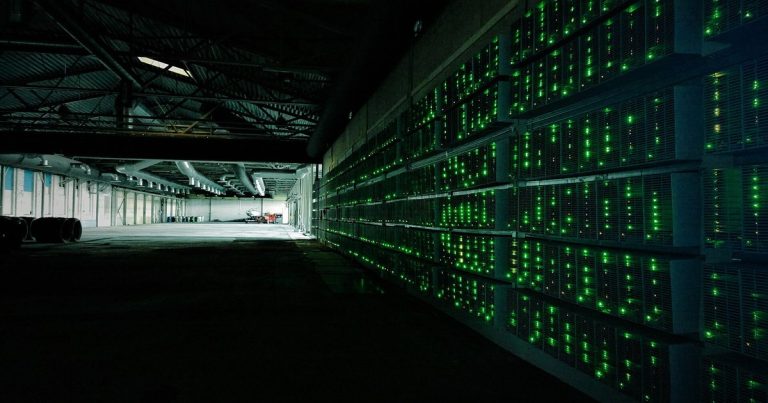
MARA, one of the largest listed miners, sold 13,597 BTC for $1.1 billion in six weeks and plans to sell more, according to CoinDesk. Cointelegraph reports that HIVE and MARA are mining more Bitcoin but earning less as prices fall.
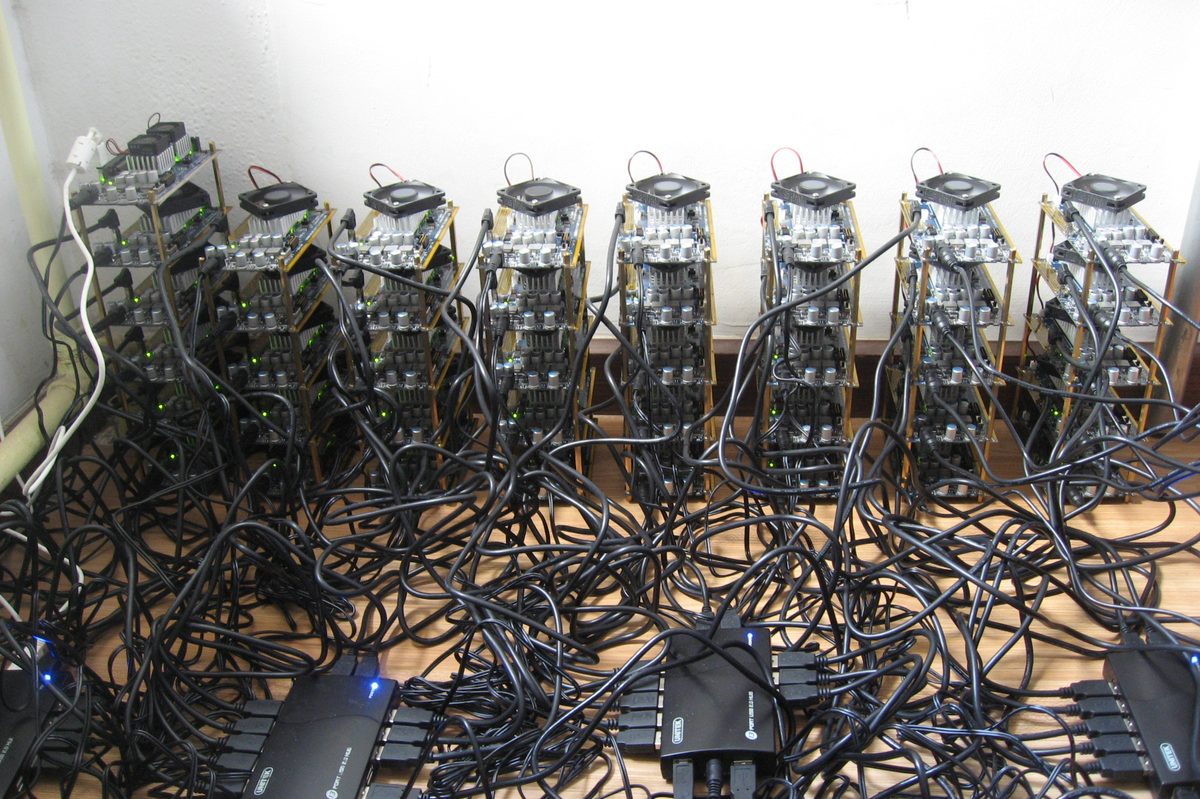
The mechanism is simple. Miners pay for electricity and machines in dollars and earn in Bitcoin. When the price drops, they need to sell more coins to cover the same bills, which adds supply exactly when buyers are scarce. This hits Bitcoin directly, and because Bitcoin is 59.65% of the whole market, it drags everything else along.
How Bitcoin, Ethereum, Solana and Zcash work differently
These four get lumped together as “crypto,” but they do different jobs. That’s why they fall at different speeds.
Bitcoin: the hard-capped store of value
Bitcoin has a fixed supply of 21 million coins and is secured by proof of work, meaning miners spend real electricity to add blocks. It does little beyond moving and storing value, and only about $3.94 billion is locked in apps on the Bitcoin chain (DefiLlama). Most people hold it as a digital alternative to gold.
Ethereum: the app platform
Ethereum runs on proof of stake, where holders lock up ETH to validate transactions instead of mining. It hosts most of crypto’s lending, trading and stablecoin activity, which DefiLlama tracks as total value locked (TVL, the money deposited in its apps). That makes ETH a bet on usage. When speculation fades, usage fades, and ETH falls more than Bitcoin.
Solana: the fast, cheap challenger
Solana also uses proof of stake but is built for speed and low fees, which made it the home of memecoins and active traders. Its TVL is $5.07 billion (DefiLlama), well below Ethereum’s. A chain popular with short-term traders sees the sharpest exits when the mood turns, and the 21.58% monthly drop reflects that.
Zcash: Bitcoin’s privacy cousin
Zcash launched in 2016 with the same 21 million coin cap as Bitcoin, but adds optional shielded transactions that hide the sender, receiver and amount using zero-knowledge proofs (math that proves a payment is valid without revealing its details). Its buyers are a different crowd from Solana’s app traders, which helps explain why it moved on its own path this month.
Why did Zcash fall less than Solana?
I’d be careful reading Zcash’s small loss as a sign of safety. Three things are going on.
First, Zcash has less exposure to on-chain leverage. Solana and Ethereum host lending markets where people borrow against their coins. When prices drop, those loans get liquidated automatically, the protocol sells the collateral, and that selling pushes prices lower still. Zcash has far less of that plumbing, so it skips the forced-selling spiral.
Second, liquidity is thinner. Zcash traded $842 million in 24 hours versus $2.07 billion for Solana (CoinGecko), and Bitcoin, the most traded coin, sees far more than either. Thin markets can hold steady for a while, then gap sharply when one large holder sells. That 3.58% one-day drop, while the others rose, shows how fast it can turn.
Third, privacy coins have their own story. Both Zcash and Monero beat the market over 30 days, which suggests buyers are paying for privacy as a feature. That demand doesn’t depend on the Nasdaq. It does depend on regulators, and that cuts the other way (more in the risks section).
Bitcoin Ethereum Solana Zcash comparison: what it did to $10,000
Percentages are abstract. Here’s what the past 30 days did to real money, using the CoinGecko 30-day changes as of November 10.
The surprise is in the last row. Many people buy several coins thinking it spreads the risk. In this month, spreading $10,000 across all four left you worse off than holding Bitcoin alone, because two of the four (Ethereum and Solana) are higher-beta bets on the same risk appetite. Owning four coins that all fall together doesn’t diversify you.
By the numbers
- $10,000 put into Bitcoin a month ago, after its 9.96% fall (CoinGecko, November 10, 2026), is worth about $9,004 today.
- The same $10,000 in Solana, down 21.58% over 30 days, is worth about $7,842.
- In Zcash, down 6.27% over 30 days, it is worth about $9,373.
- Split evenly at $2,500 per coin (Ethereum down 15.49%), the four-coin basket is worth about $8,667.50, below Bitcoin alone.
How we calculated: each row applies the 30-day percentage change from CoinGecko data taken on November 10, 2026 to a round $10,000 example, ignoring trading fees and taxes.
Has crypto done this before?
Yes, and the order of losers usually looks like this one. I bought altcoins in the 2017 cycle, and in the 2018 bear market the smaller coins fell much harder than Bitcoin, with many never coming back. When fear rises, money retreats to the biggest, most liquid coin first, so Bitcoin’s dominance (its share of total crypto value, now 59.65%) tends to climb.
Context matters for this month, too. Bitcoin is down 10.69% over one month but still up 16.93% over three months (Yahoo Finance, November 10). So this pullback comes after a strong run, not in the middle of a long slide. That doesn’t tell you where it goes next. It does tell you that anyone who bought in the summer is still ahead, and anyone who bought at the October highs is not.
If you want the background on why smaller coins swing harder, my piece on what altcoins are and why they’re sliding covers it.
Main risks and common mistakes when comparing these coins
Treating four coins as diversification
The basket math above shows it. Ethereum and Solana track the same risk appetite as Bitcoin, only more violently. Real diversification means owning things that don’t fall together, such as cash, bonds or broad stock funds, alongside any crypto.
Reading one week as a trend
Zcash’s +1.93% week looks great until you see the -3.58% day. Short windows in crypto are mostly noise. Compare 30-day and 3-month moves before you draw conclusions.
Forgetting where your coins sit
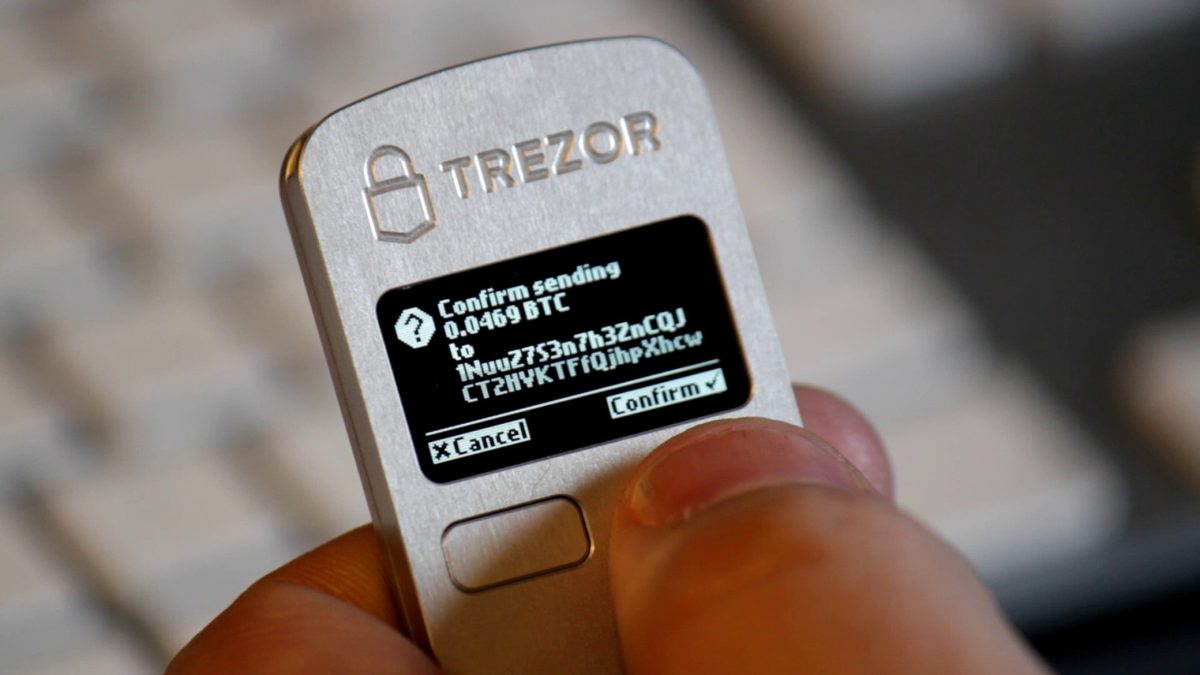
Price isn’t the only way to lose money. CoinDesk reported on November 9 that North Korean hackers are creating memecoins to launder loot from the $6.3 billion Binance hack. Coins left on an exchange depend on that exchange’s security. My guide to hot wallets vs cold wallets explains how to take custody yourself.
Ignoring privacy coin rules
Privacy coins carry a risk the other three don’t: some exchanges in some countries have restricted or delisted them because shielded transactions are hard to monitor. If your exchange drops Zcash, you may have to withdraw or sell on its timeline, not yours. Check your platform’s policy before you buy.
Which is safest for beginners: Bitcoin, Ethereum, Solana or Zcash?
None of them is safe in the way a savings account is safe. On this month’s numbers, though, Bitcoin had the smallest drawdown of the three big coins and by far the deepest market of the four. Deep markets let you get in and out near the quoted price, which matters most exactly when you’re nervous.
Ethereum is the next step up in risk, tied to how much the apps on it get used. Solana is the high-beta option. Zcash is a niche bet on privacy demand, with thinner trading and regulatory exposure. If you are new, that ranking by risk is more useful than any ranking by recent return.
What I’d watch next for Bitcoin, Ethereum, Solana and Zcash
A few concrete markers will tell you which way this goes:
- The October CPI report this week. September inflation was 3.74% (BLS). A hotter print keeps the 10-year yield near 4.86% or higher and pressures every coin on this list.
- Miner selling. MARA says more sales are coming. Watch its next production update for how many coins it moves.
- Bitcoin dominance at 59.65%. If it keeps rising, money is still hiding in Bitcoin and Solana and Ethereum likely keep underperforming.
- Ethereum TVL on DefiLlama. A steady TVL while price falls means users are staying. A falling TVL means they’re leaving.
- Nasdaq direction. As long as crypto follows tech, a weak week for chip stocks is a warning for your coins.
For a weekly read on the wider market, see my crypto market this week update. This is not financial advice, so do your own research before you put money anywhere.
FAQ
Which fell the most this month: Bitcoin, Ethereum, Solana or Zcash?
Solana fell the most, down 21.58% over 30 days according to CoinGecko data on November 10, 2026. Ethereum lost 15.49%, Bitcoin 9.96% and Zcash 6.27%.
Is Zcash a better investment than Bitcoin?
One good month doesn’t make it better. Zcash traded $842 million in 24 hours (CoinGecko), a small fraction of what Bitcoin trades, so it is far less liquid, and privacy coins face exchange restrictions in some places. Its smaller loss this month came alongside a 3.58% one-day drop while Bitcoin rose.
Why is Solana more volatile than Bitcoin?
Solana is smaller, ranked seventh by market cap, and its chain is full of active traders and leveraged positions. When sentiment turns, those traders exit quickly and liquidations add forced selling. Bitcoin’s deeper market absorbs selling more easily.
What is the difference between Ethereum and Solana?
Both are proof-of-stake platforms that run apps, but Ethereum hosts far more money in its apps than Solana, whose TVL is $5.07 billion per DefiLlama. Solana is built for speed and low fees, which makes it popular for fast trading and memecoins.
Do Bitcoin and Zcash have the same supply cap?
Yes. Both have a maximum supply of 21 million coins. The main difference is that Zcash offers optional shielded transactions that hide payment details using zero-knowledge proofs, while Bitcoin transactions are fully visible on its public ledger.
Does the CPI report affect crypto prices?
Usually, yes. Inflation data shapes expectations for Fed rates, now 3.88% for the effective fed funds rate, and higher rates make interest-paying assets more attractive than coins that pay nothing. CoinDesk described this week’s CPI release as a direct test for Bitcoin.
Related reading
Keep reading

Sources coindesk.com
This article is for information only and is not financial advice. Crypto assets are volatile; you can lose all of your money.