12 min read
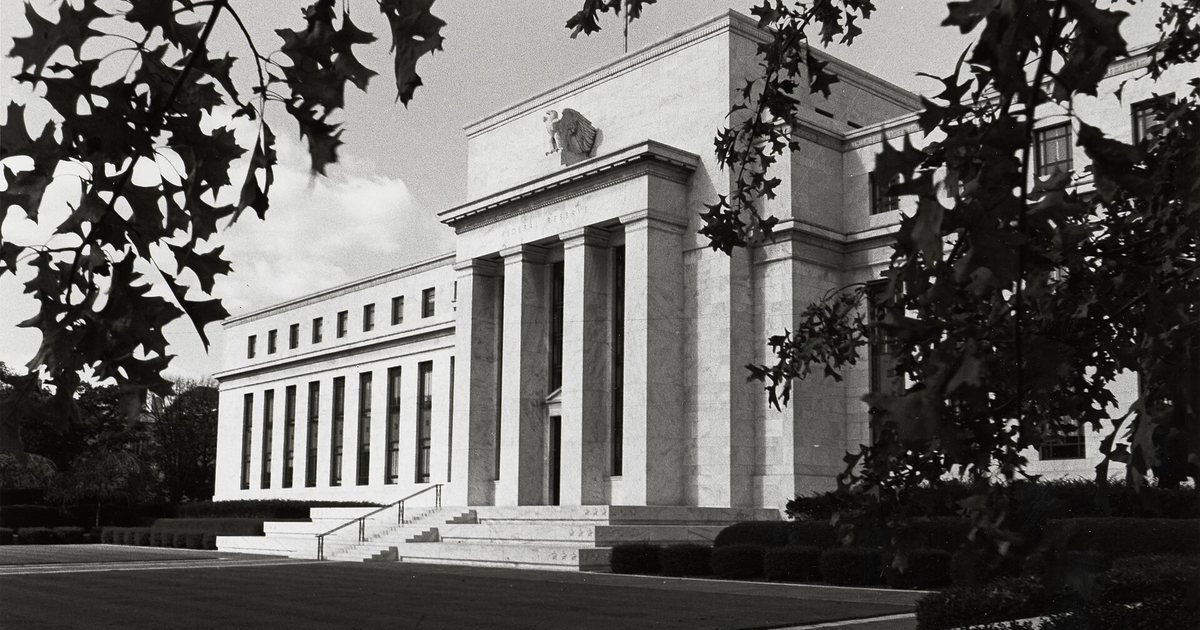
Fed rate hike December odds hit 88.8% on November 11, based on CME FedWatch data cited by Investing.com. That leaves the odds with no room for a cut. The other 11.2% is a bet on a half-point hike, after October consumer prices rose 0.4% against a 0.3% forecast and Governor Christopher Waller said a 50-basis-point move “should be considered.”
Your money in an FDIC-insured bank account isn’t at risk from any of this. What changes is the price of borrowing and the yield on cash. The decision lands Wednesday, December 9, at 2:00 p.m. ET.
Key takeaways
- Futures markets give a 25bp December hike 88.8% odds and a 50bp hike 11.2% (CME FedWatch via Investing.com, November 11). A week earlier the 25bp odds were about 72%.
- A half-point hike adds about $50 a year in interest for every $10,000 of variable-rate debt, twice the $25 a quarter point would cost.
- At Freddie Mac’s 7.18% 30-year rate (November 5) versus 6.22% a year earlier, a $300,000 mortgage carries roughly $2,880 more interest in its first year.
- Bitcoin sits at $71,486, down 13.78% in 30 days (CoinGecko, November 12). A $5,000 position is about $689 lighter than a month ago.
Fed rate hike December odds: what markets are pricing now
The FedWatch tool turns fed funds futures prices into probabilities. It reflects what traders are betting, not anything the Fed has said, and it can move every day. The Fed has not decided anything yet. Markets expect a hike, and several officials lean that way.
The odds moved fast. About a week before November 11 a quarter-point hike was roughly a 72% bet. Right after the October CPI on November 10, the odds of a half point jumped from about 1% to about 15%, then eased to 11.2% the next day, according to Investing.com via Yahoo Finance.
The rate banks actually charge each other overnight, the effective fed funds rate, was 3.88% on November 10 (New York Fed). That sits inside the current target range of 3.75% to 4.00%.
What would a 25bp or 50bp hike do to the fed funds rate?
A basis point is one hundredth of a percentage point, so 25bp means 0.25 points. The three outcomes look like this:
| Outcome on Dec. 9 | Fed funds target range | Market odds (Nov. 11) | Who is making the case |
|---|---|---|---|
| Hold | 3.75%-4.00% | Not priced | No official quoted in the sources |
| 25bp hike | 4.00%-4.25% | 88.8% | Goldman Sachs’ David Mericle (forecast), Northlight’s Chris Zaccarelli |
| 50bp hike | 4.25%-4.50% | 11.2% | Governor Christopher Waller says it “should be considered” |
Goldman’s Mericle expects 25bp in December and another 25bp in March 2027, which would take the range to 4.25%-4.50%. That’s the same place a single half-point move would get to, just three months later. That is a forecast. Nobody knows yet which path the committee takes.
Why is the Fed raising rates in December instead of cutting?
Two reports in five days did it: a jobs number that came in well above expectations, then an inflation print that beat forecasts on both headline and core.
The October CPI report ran hot
The Consumer Price Index rose 0.4% in October, released Tuesday, November 10. Consensus was 0.3%. September had been 0.6%. Core CPI, which strips out food and energy because they swing so much, rose 0.3% against a 0.2% forecast. Core has now printed 0.3% three months in a row, and that streak worries the Fed more than any single month.
Shelter rose 0.3% and made up more than 30% of the total increase. Energy rose 0.7% and food 0.5%. Used cars fell 1.2%, the main thing pulling the other way. I covered the line items in our October CPI results breakdown. InvestmentNews has the market reaction.
Why is there no annual inflation number for October?
Because of a lapse in government funding, the Bureau of Labor Statistics did not publish 12-month changes for October. The last official annual core figure is 2.6%, for September. If you see a precise October year-over-year number quoted anywhere, it’s someone’s estimate, not BLS data.
The jobs report that took away the case for waiting
On Friday, November 6, payrolls rose by 165,000, well above consensus. August was revised to +186,000 and September to +60,000. Unemployment held at 4.1%. Average hourly earnings rose 0.4% to $38.00, up 3.1% from a year earlier, per 24/7 Wall St. via Yahoo Finance.
The link to rates is simple. Steady hiring and rising wages let companies keep raising service prices, and shelter and services are where core inflation has been stuck. A weak labor market would have given the Fed a reason to hold. This report didn’t.
What Fed officials are saying about a December hike
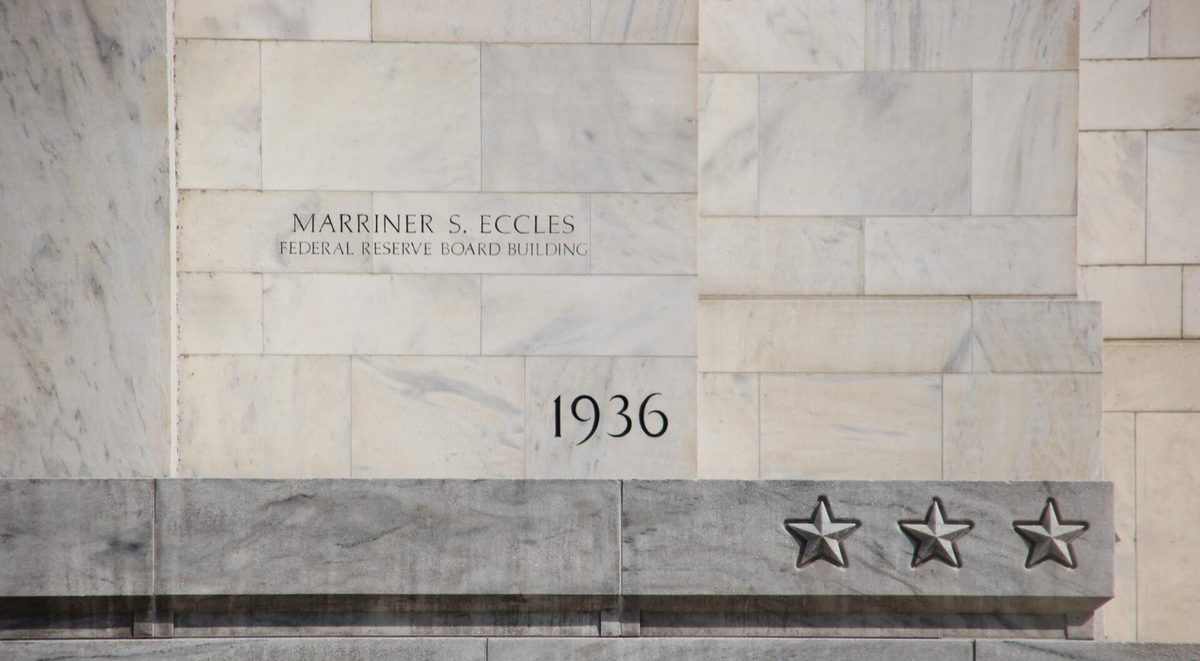
Fed officials don’t usually talk this plainly about the next meeting. This time several of them have.
Waller’s half-point warning
In a November 10 speech, Governor Christopher Waller said he was leaning toward a 25bp December hike. He added that if core CPI came in “around 0.3 percent or even higher,” a 50bp hike “should be considered.” Core came in at exactly 0.3%. His line on credibility: “Hiking only 25 basis points would put our credibility at risk, a risk I am not eager to take.” (MLQ, citing federalreserve.gov)
Credibility is the right word to focus on. If people stop believing the Fed will get inflation back to its 2% goal, they start asking for bigger raises and setting higher prices, and inflation becomes harder to bring down.
Logan, Paulson and Goolsbee
Dallas Fed President Lorie Logan, who votes in 2026, said on November 10 that the committee “needs to implement at least two more 25-basis-point rate increases.” Philadelphia Fed President Anna Paulson said “further gradual tightening seems appropriate.” Chicago Fed President Austan Goolsbee called the CPI “borderline disturbing,” which I unpacked in this piece on his comments.
Fed Chair Kevin Warsh runs the meeting. The sources here don’t record where he stands on December.
Who thinks 50bp goes too far?
Northlight’s Chris Zaccarelli expects 25bp, not 50bp. Janus Henderson’s Daniel Siluk said a half-point move “would be a high bar.” Those are opinions from market strategists. I’d treat 25bp as the base case and 50bp as a real tail risk. An 11.2% chance is too big to ignore when it’s your mortgage quote on the line.
How did the Fed get here? The 2026 rate path
The Fed’s last cut was December 10, 2025. Less than a year later, the debate is about how big the next hike should be.
- December 10, 2025: last rate cut.
- July 29, 2026: hold.
- September 16, 2026: 25bp hike to 3.75%-4.00% on a 12-0 vote, the first hike since July 2023.
- October 28, 2026: hold, with two members dissenting in favor of a hike.
- November 6 and 10, 2026: strong jobs report, then hot CPI. Waller and Logan call for more.
The two October dissents were the early warning. When officials vote against a hold because they wanted a hike, the next meeting usually starts with the hike already on the table. There have been no cuts at all in 2026.
How a December rate hike reaches your wallet
The Fed sets only an overnight rate. Everything else moves through a chain: bond yields, the dollar, the flow of money into risky assets, company earnings, and finally your loan and account statements.
Bond yields move first
The 2-year Treasury yield, which tracks expected Fed moves closely, was about 4.74% late on November 10, and the 10-year rose to about 4.94% shortly after the CPI release (CNBC via MLQ). By November 12, Yahoo Finance data showed the 10-year at 5.1%, up 8.99% over three months in yield terms.
The 10-year doesn’t follow the Fed one for one. It also carries a term premium, the extra yield investors demand for locking money up for a decade instead of rolling short bills. When inflation looks sticky, that premium tends to grow. That’s why long rates can rise even before the Fed acts.
The dollar, the yen and markets abroad
Higher US rates make dollar deposits and Treasuries more attractive than foreign ones. The US dollar index was 103.18 on November 12, up 3.17% in three months, while the euro fell 4.19% over the same stretch to $1.11 (Yahoo Finance). The dollar bought 159.88 yen.
A wide gap between US and Japanese rates feeds the carry trade, where investors borrow in a low-rate currency to buy higher-yielding assets. When those positions get unwound fast, it shows up as risk-off selling, meaning money moves out of stocks and crypto into cash and bonds. Asian indexes have had a rough month: KOSPI down 15.8% and the Nikkei 225 down 9.63% (Yahoo Finance, as of November 11). Several stories are moving those markets, so I wouldn’t pin it all on the Fed. Rate expectations are clearly one of them.
What a Fed rate hike means for mortgages, credit cards and savings
Will mortgage rates go up after a December hike?
Thirty-year mortgages track the 10-year Treasury more than the fed funds rate, so a lot of the hike is already in the price. Freddie Mac’s 30-year fixed rate was 7.18% on November 5, against 6.22% a year earlier. That data predates the hot CPI, and the 10-year has climbed since. I tracked the daily moves in our mortgage rate tracker.
This also deepens the lock-in effect: owners sitting on older, cheaper mortgages won’t sell, because moving means taking a much higher rate. Fewer listings keep home prices high, which helps explain why shelter keeps showing up in CPI. How high mortgage rates go from here is one of the open questions. Nobody can tell you that yet.
Credit cards and HELOCs move almost right away
Most US credit cards and home equity lines are priced off the prime rate, which moves with the fed funds rate. A December hike usually shows up on your statement within a billing cycle or two. Card debt is the place where this hike hurts fastest.
Savings accounts and CDs
Banks raise loan rates faster than deposit rates. High-yield savings accounts usually follow a hike, but slowly and not always fully. CDs lock in whatever rate you get on the day you open them, so the date you open one matters more than usual this close to a Fed meeting.
By the numbers
- A 25bp December hike, the 88.8% scenario on November 11, lifts the top of the fed funds range from 4.00% (the target set September 16, 2026) to 4.25%, adding about $25 a year in interest on $10,000 of variable-rate debt.
- A 50bp hike, the 11.2% scenario Waller says should be considered, takes the top of the range from 4.00% to 4.50% and doubles that to about $50 a year per $10,000.
- On a $300,000 mortgage, Freddie Mac’s 7.18% rate (November 5, 2026) versus 6.22% a year earlier means roughly $2,880 more interest in the first year.
- Bitcoin’s 13.78% 30-day drop (CoinGecko, November 12, 2026) takes about $689 off a $5,000 position.
How we calculated: hike sizes are the gap between the top of the current 3.75%-4.00% target range (set September 16, 2026) and the 4.00%-4.25% and 4.25%-4.50% ranges in the CME FedWatch scenarios reported by Investing.com on November 11, 2026; mortgage rates are Freddie Mac’s November 5, 2026 figure and the year-earlier rate, applied as simple first-year interest on the full balance with no amortization; the bitcoin move is CoinGecko’s 30-day change as of November 12, 2026.
Will a December rate hike hit stocks and bitcoin?
Stocks: the Nasdaq feels it more than the Dow
Over the past month the S&P 500 slipped 1.69% to 7,588.34, the Nasdaq Composite fell 5.06%, and the Dow actually rose 1.33% (Yahoo Finance, November 12). That split is typical when yields rise. Growth stocks get much of their value from profits years away, and a higher discount rate shrinks what those future profits are worth today. Companies earning cash now hold up better.
The earnings side matters too. Higher borrowing costs squeeze companies that carry floating-rate debt, and consumers paying more on cards spend less elsewhere. If you hold an index fund, you own both kinds of company, which is why a broad fund fell less than the Nasdaq did.
Bitcoin and gold after the CPI surprise
Bitcoin was $71,486 on November 12, down 4.19% in 24 hours and 13.78% in 30 days, per CoinGecko. The whole crypto market was worth about $2.42 trillion, down 5.72% in a day. Ether fell 19.6% over 30 days to $2,018.21.
Fortune, Kriptofoni and Univest reported bitcoin trading around $71,500 to $73,000 on November 12, down from above $75,000. Each outlet linked the drop to the hot inflation data and the rate-hike bets. For the bigger picture, see our look at bitcoin since the midterms.
Gold fell more than 3% to about $3,864 an ounce on November 12, according to TradingKey. Yahoo Finance futures data showed $3,885.30, down 2.88% on the day and 13.03% over three months. Gold pays no interest, so when Treasuries yield around 5%, holding it costs you more in income you give up. A stronger dollar adds to the pressure, because gold is priced in dollars.
I’d be careful with the idea that bitcoin is an inflation hedge right now. In this cycle it has traded like a high-risk asset that depends on easy money, and tighter money has been working against it.
Common mistakes before the December 9 Fed decision
The first is reading 88.8% as a done deal. The 25bp odds went from about 72% to 88.8% in a week, and the 50bp odds went from about 1% to about 15% in one afternoon. Two more big reports land before the meeting, and either could move them again.
The second is waiting for the Fed decision to lock a mortgage rate. By December 9, lenders will already have priced in whatever the bond market expects. If the projections released that day point to more hikes, long yields can rise even when the hike itself was expected.
The third is ignoring the day after. November CPI comes out December 10, less than 24 hours after the decision. A hot number there could reprice the March 2027 meeting, the one Goldman’s forecast points to, right away.
The last is chasing yield into something you can’t easily get out of. A higher savings rate is welcome. Locking all your cash into a long CD just before a possible half-point move means you could miss a better rate a month later.
FAQ
Will the Fed raise interest rates in December 2026?
The Fed hasn’t decided. Markets price about an 88.8% chance of a 25bp hike and 11.2% for 50bp (CME FedWatch via Investing.com, November 11). Governor Waller and Dallas Fed President Logan have both argued for further hikes.
How much could the Fed raise rates on December 9?
A 25bp hike would lift the target range from 3.75%-4.00% to 4.00%-4.25%. A 50bp hike would take it to 4.25%-4.50%. Waller said 50bp should be considered if core CPI ran around 0.3% or higher, and October core came in at 0.3%.
Will mortgage rates go up if the Fed hikes in December?
Mortgage rates follow the 10-year Treasury yield more than the Fed’s overnight rate. Freddie Mac’s 30-year rate was already 7.18% on November 5, and the 10-year reached 5.1% on November 12 (Yahoo Finance). How much further they rise depends on the bond market, and nobody knows that yet.
Is my money in the bank safe if the Fed raises rates?
Yes. A rate hike doesn’t put FDIC-insured deposits at risk. It changes what your bank pays you and what it charges you. Check whether your savings rate actually rises after the hike.
What time is the Fed announcement on December 9?
The FOMC meets December 8-9. The decision and new economic projections come out Wednesday, December 9, at 2:00 p.m. ET.
Does a Fed rate hike hurt bitcoin?
Not automatically, but rate-hike bets have lined up with bitcoin’s slide this month. Bitcoin is down 13.78% in 30 days to $71,486 (CoinGecko), and several outlets linked the November 12 drop to hot inflation data and expectations of a hike.
What I’m watching before December 9
These are the dates and levels that could change the odds:
- December 2, PCE inflation: the Fed’s preferred inflation gauge. Another firm core reading makes a 50bp move harder to rule out.
- December 4, November jobs report: after +165,000 in October, a second strong month leaves the Fed little reason to stop at 25bp.
- The 50bp odds: they were 11.2% on November 11. If they climb back toward the roughly 15% seen right after CPI, the market is starting to agree with Waller.
- The 10-year yield near 5.1%: this matters more for mortgage quotes than the Fed decision does.
- December 9 at 2:00 p.m. ET, then December 10 CPI: the decision, the new projections, and an inflation report less than a day later.
For my own money, the to-do list is short. Check what my card and any home equity line charge. Confirm my savings account actually passed through September’s hike. And don’t make a big rate-sensitive decision in the 48 hours around December 9, when markets can swing hard.
This is not financial advice. Do your own research.
Related reading
Keep reading
Sources sg.finance.yahoo.com · investmentnews.com · finance.yahoo.com · mlq.ai · tradingkey.com
This article is for information only and is not financial advice. Crypto assets are volatile; you can lose all of your money.